Analysis of Glass Fiber, PP, Composite PP, ePTFE
|
Synthetic fiber filter media |
Glass fiber filter media |
|
|
Filter material |
PP, PET, Nylon, PP-PET, PTFE, PVDF |
Mico fiberglass |
|
Mode of action |
After electrostatic charging treatment, particles can be intercepted through physical interception and adsorption |
Without electrostatic treatment, the fiber structure is very tight, and extremely small fiber voids block the particles |
|
Application scope |
The main material of the filter screen for H13 grade and below filters is mainly used in household air purifiers |
It features high filtration efficiency and can be applied in industrial clean rooms, chip workshops, operating rooms, high-end purifiers, high-end fresh air systems, etc. |
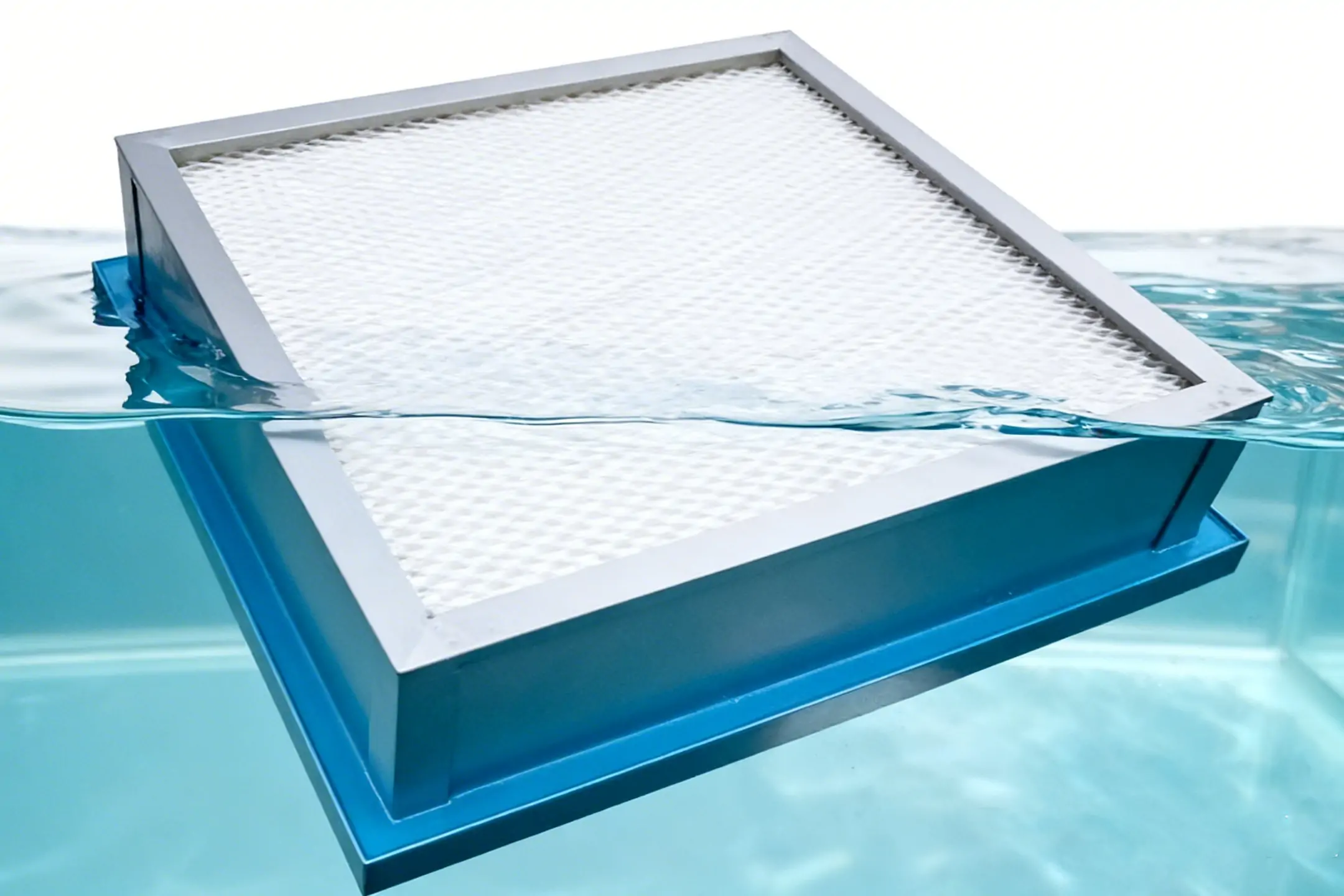
Glass Fiber Filter (Glass Fiber Filter Media Pack)
Glass Fiber Filter Media Features:
The material is microglass fiber media, with a fiber diameter of about 0.3 μm, a dense structure, and relies on physical interception and filtration of particles.
Pros:
- It has a large dust holding capacity (long service life), a single filtration efficiency (up to 99.9995%), and a filtration accuracy of 0.1μm.
- It does not rely on electrostatic adsorption, and there is no risk of filtration failure.
Cons:
- The wind resistance is large (about 200Pa), and it needs to be equipped with a high-power motor, which makes the noise high.
- The material is brittle, fragile, not washable, and needs to be fixed with a metal/aluminum frame, which is expensive.
Usage Scenarios:
- Industrial clean rooms, chip workshops, operating rooms, high-end fresh air systems and other places with extremely high requirements for cleanliness.
- It is not suitable for ordinary household purifiers (due to high wind resistance and high noise).
PP Filter Media (Polypropylene)
Features:
The material is polypropylene meltblown fiber, the fiber diameter is about 4 μm, usually treated by electrostatic electret (physical interception + electrostatic adsorption).
Pros:
- Acid and alkali resistance, corrosion resistance, stable performance, non-toxic and tasteless.
- The wind resistance is low (about 100Pa) and the cost is low.
Cons:
- Low dust holding capacity and fast failure rate (static electricity is easy to attenuate).
- The filtration efficiency is limited (up to H14 class, but the actual household use is mostly H10-H12 class).
Usage Scenarios:
- Pre-filtration of household air purifiers, water treatment (e.g. removal of large particles).
- Applicable scenarios: pre-filtration of pharmaceutical injections, food and beverage, pure water pretreatment in the electronics industry, etc.
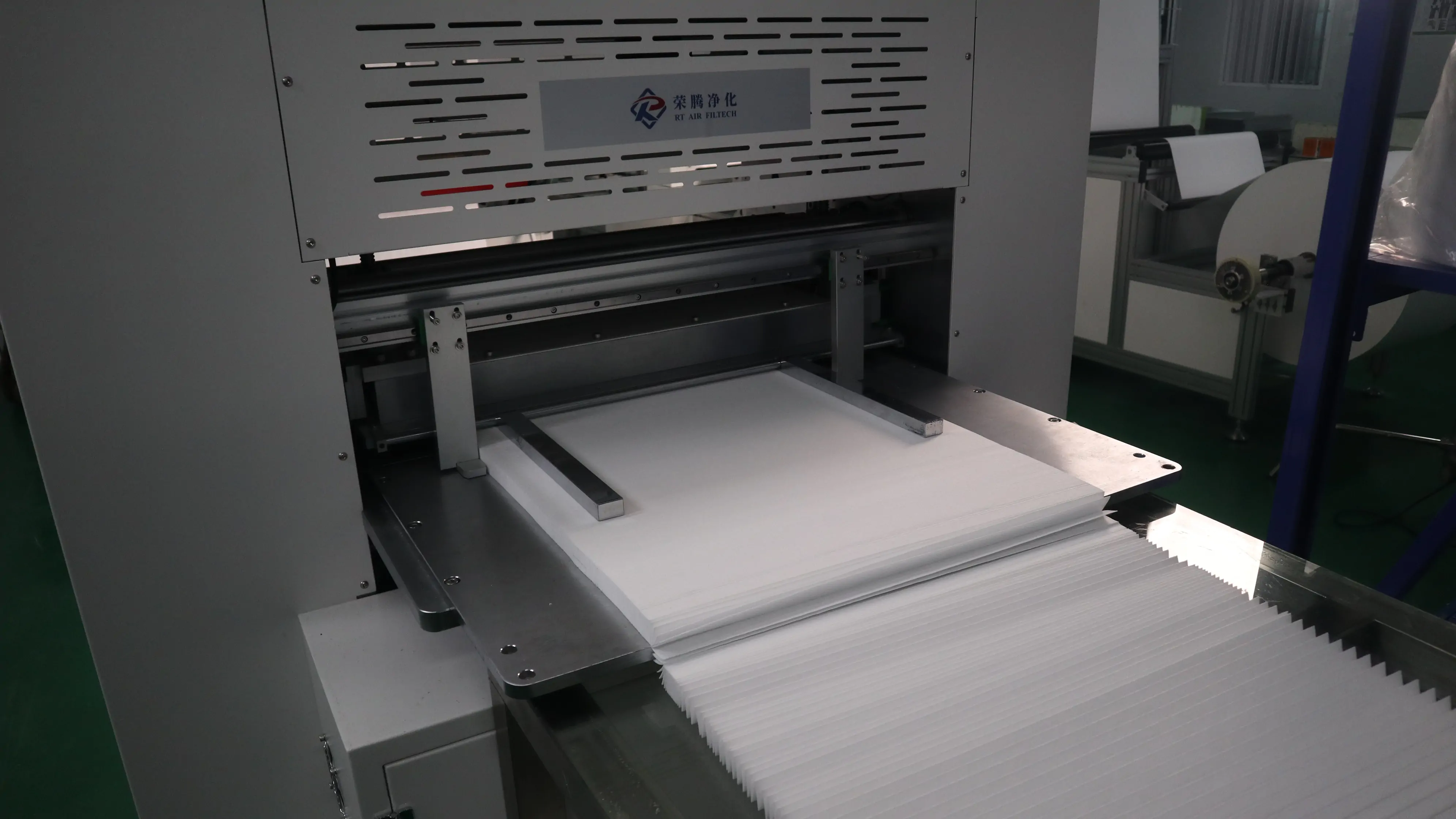
Composite PP Filter Media (PET+PP)
Features:
Pros:
- The wind resistance is extremely low (only 50Pa for H13 class and about 20Pa for H12 class), which is suitable for small wind turbine equipment.
- The filtration efficiency can reach H13 level (99.95%).
Cons:
- Relying on electrostatic adsorption, the efficiency will be attenuated in the long term.
- A large fan is required to maintain the air volume, and the bdust holding capacity is medium.
Usage Scenarios:
- The mainstream choice of HEPA filters for home air purifiers (balancing efficiency, wind resistance, and cost).
- Household appliances that are sensitive to wind resistance, such as vacuum cleaners.
ePTFE Cartridge (Expanded PTFE Cartridge)
Features:
Pros:
- High chemical stability: high temperature resistance (260°C), corrosion resistance, hydrophobicity.
- Low wind resistance and high efficiency: The wind resistance is lower than that of glass fiber at the same efficiency, and the MPPS (most penetrating particle size) is smaller.
- High mechanical strength: the tensile strength is 8 times that of glass fiber
Cons:
- The price is expensive, and the production technology is monopolized.
- It is not suitable for abrasive dust environments (the membrane is easily damaged).
Usage Scenarios:
- High-end industrial filtration (chemical, pharmaceutical clean room, microelectronics clean room).
Additional Notes:
- Electrostatic adsorption problem:PP and composite PP rely on static electricity, and the efficiency decreases after humid environment or long-term use; Glass fiber/ePTFE pure physical filtration is more stable.
- Wind resistance and energy consumption: composite PP (low wind resistance) is preferred for household use; Glass fiber/ePTFE (high efficiency) can be selected for industrial high-clean scenes.
- Safety: The glass fiber filter media pack may release fibers when broken, and it needs to be tightly sealed; ePTFE is chemically inert and safer.
It is advisable to select the filter media pack according to the specific needs (e.g., accuracy, wind resistance, cost) and refer to the fan capacity of the equipment (e.g., low air resistance for household equipment).