An Advanced Air Filtration Guide for HVAC & Procurement
From "Just Buying the Right One" to "Deeply Understanding It"
Whether you're in a spacious, brightly lit office or a noisy production facility, we are constantly at war with an unseen enemy—air pollutants. As a procurement manager, your challenge isn't just to choose an air purifier or a new ventilation system. You need to ensure this investment is worthwhile, truly safeguarding employee health and maintaining a stable production environment. For new HVAC engineers, you're not just taking on a set of pipes and equipment diagrams; you're inheriting a building's entire "respiratory system," and you need to diagnose and treat it with precision.
In the industry, we often hear complaints like, "I paid a high price for a high-efficiency filter, but the effect isn't noticeable," or "Why do some filters of the same class fail so quickly?" Behind these frustrations lies a significant knowledge gap. Do you know that the most expensive filter isn't always the best, and that it must be precisely matched to your actual needs? Do you understand how seemingly minor design parameters like airflow, resistance, and dust holding capacity jointly determine a filtration system's "life cycle" and "battle-readiness"?
This article will take you behind the scenes of air filtration, from the macro-level system design concepts to the micro-level technical parameter interpretations. We will peel back the layers of complex jargon, helping you evolve from "just buying the right one" to "deeply understanding it" and truly becoming an expert in the field of air filtration.
A Deep Dive into the Three Decisive Parameters
An excellent air filtration system is like a highly efficient army. The army's effectiveness isn't determined by a single weapon but by a combination of the soldiers' quality, logistical support, and strategic deployment. In air filtration, the three decisive parameters are: filtration efficiency, dust holding capacity, and initial resistance.

1. Filtration Efficiency (What)
Filtration efficiency, as the name suggests, is a filter's ability to capture particles of a specific size. It's usually expressed as a percentage. For example, a HEPA H13 filter achieves at least 99.95% efficiency for particles 0.3 micrometers (μm) in size.
-
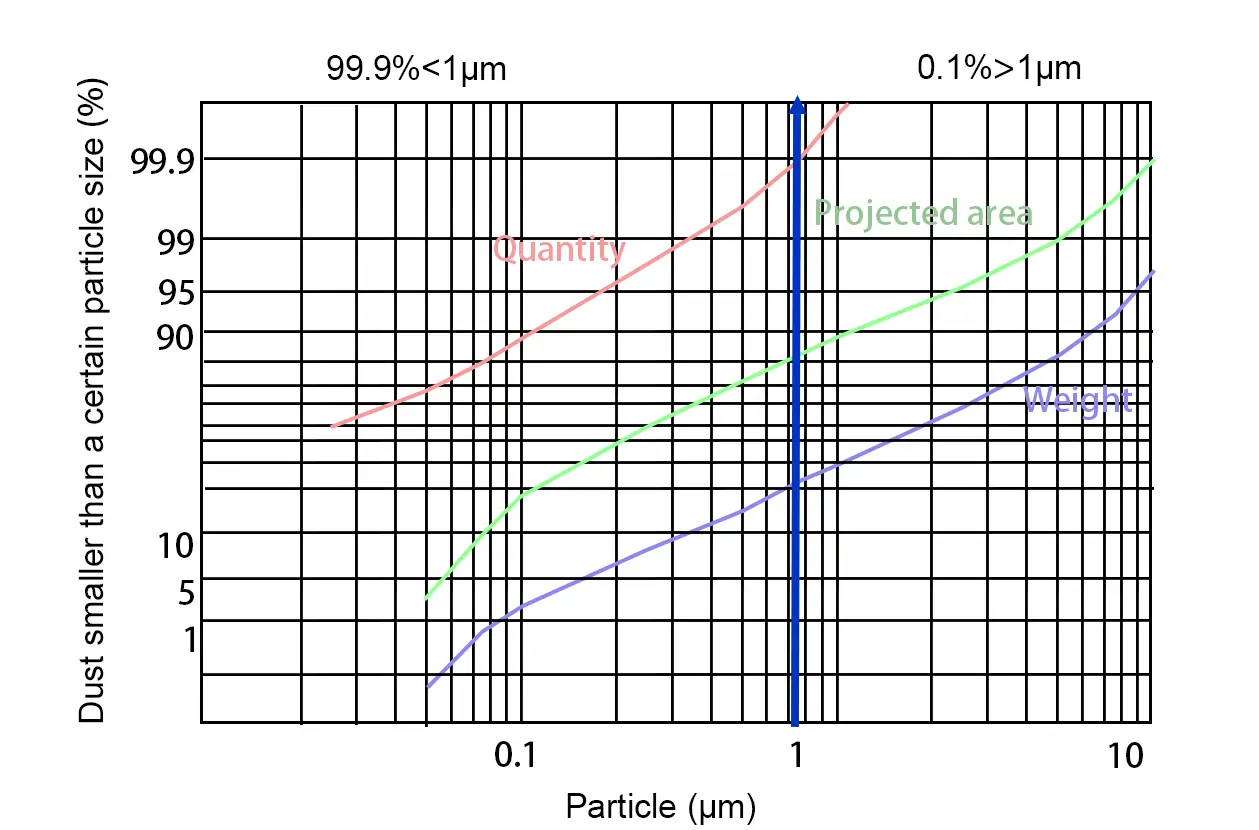
Why: Why not 100%? Because 0.3 micrometers is a very special size, known as the Most Penetrating Particle Size (MPPS). Particles smaller than this are intercepted due to Brownian motion (random movement), while those larger than this are more easily captured by inertial impaction and sieving effects. Therefore, the 0.3 μm MPPS has become the gold standard for measuring a filter's performance. Understanding the MPPS is like understanding the filter's "Achilles' heel."
-
How: The choice of filtration efficiency should be based on the type of pollutants you need to handle and your target cleanliness level. For instance, a high-efficiency filter (like F7-F9) is often sufficient for a standard office environment that needs to remove PM2.5. However, for a cleanroom or an operating room, an ultra-high-efficiency filter (like H13-U17) is a must.
2. Dust Holding Capacity (What)
Dust holding capacity is the total amount of dust a filter can hold before reaching its designed final resistance. It's typically measured in grams (g).
-
Why: Dust holding capacity determines a filter's service life. A filter with a low dust holding capacity, no matter how high its efficiency, will quickly get clogged with dust, causing a sharp rise in resistance and requiring frequent replacement. It's like a shallow bucket—no matter how good the faucet, it will overflow quickly. Dust holding capacity is key to lowering operating costs and reducing maintenance frequency.
-
How: Dust holding capacity is closely related to the filter material's internal structure, such as pleat density, fiber diameter, and arrangement. When purchasing, pay attention not only to efficiency but also to the nominal dust holding capacity. Usually, pre-filters (like G4) have a high dust holding capacity and can extend the life of medium and high-efficiency filters, a strategy of "coarse filtering to protect fine filtering."
3. Initial and Final Resistance (What)
Initial resistance is the static pressure difference between the air inlet and outlet when a new filter is operating at its rated airflow. Final resistance is the resistance value at which the manufacturer recommends replacing the filter, marking the end of its useful life.
-
Why: Resistance directly determines the energy consumption of the fan. It's like a car driving on a muddy road—it requires more power. When filter resistance is too high, the fan must consume more energy to maintain airflow, causing operating costs to soar. And once the airflow drops, the cleanliness level also decreases. This is similar to a human blood vessel; if it's blocked, the heart has to pump blood with more force, ultimately affecting the oxygen supply to the entire body. Understanding and managing initial and final resistance is the key to balancing performance and cost. A filter with a low initial resistance starts with less energy consumption, while a filter with a high dust holding capacity can take longer to reach its final resistance, prolonging its life and reducing replacement costs.
-
How: In system design, you must balance filtration efficiency, resistance, and energy consumption. A wise strategy is to use multi-stage filtration: first, use a coarse filter with low resistance and high dust holding capacity to remove most large particles, then use a medium-efficiency filter to remove smaller particles, and finally, use a high-efficiency filter for terminal fine filtration. This ensures cleanliness while effectively extending the life of the high-efficiency filter and reducing overall operating costs.
Diagnosing a Filtration System Like a Doctor
1. Step-by-Step Breakdown: A Complete Procurement Process
-
Needs Analysis: First, clarify your goals. Do you need to remove PM2.5? Odors? Or bacteria? This determines the filtration class you choose (from coarse to ultra-high efficiency).
-
On-site Survey: Understand the installation space and the rated airflow of the existing ventilation system or air conditioner. This is like a doctor's consultation, understanding the patient's physical condition.
-
Matching and Selection: Based on airflow and target cleanliness, select a filter by comparing it with the manufacturer's provided performance curves (airflow-resistance curve, efficiency-dust holding capacity curve).
-
Cost Calculation: The LCC (Life Cycle Cost) analysis method is a powerful tool for procurement managers. It considers not only the initial purchase cost but also the replacement cost, maintenance cost, and energy consumption. Remember, a cheap filter can mean higher long-term operating costs.