Are Bag Filters Being Replaced? Why Compact Filters Are Gaining Ground in HVAC
The HVAC filtration market is evolving. Across parts of the North American commercial HVAC sector, V-bank compact filters are gaining ground, challenging the traditional position of bag filters.
Does this mean bag filters are becoming obsolete?
Not necessarily. Bag filters remain an established filtration solution, but their competitive position is changing as HVAC system designs, energy requirements, and installation constraints evolve.
The key to understanding this shift is not simply filtration efficiency. It is how different filter designs perform under real operating conditions.
1. Why Are Bag Filters Facing Increasing Competition?
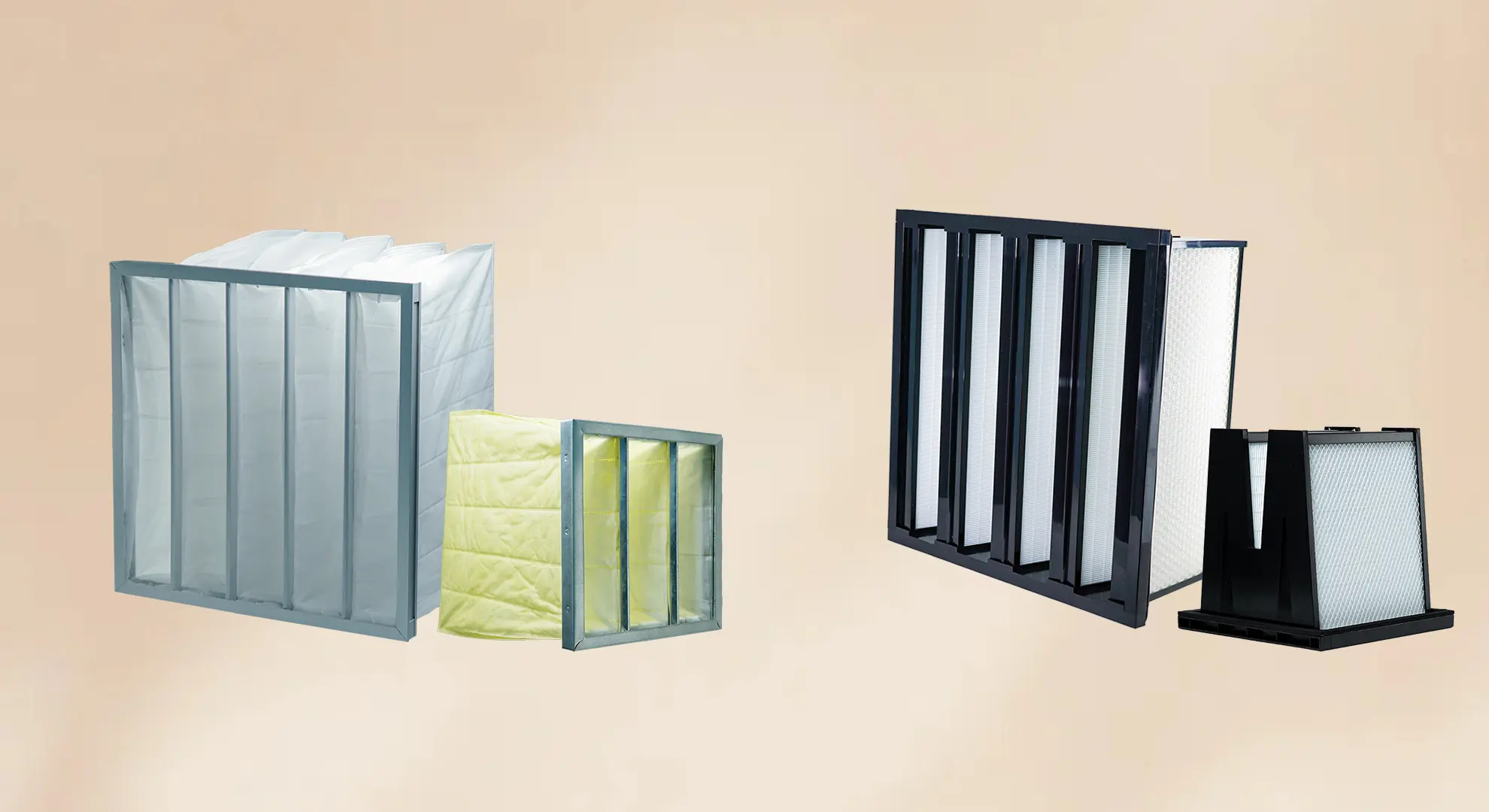
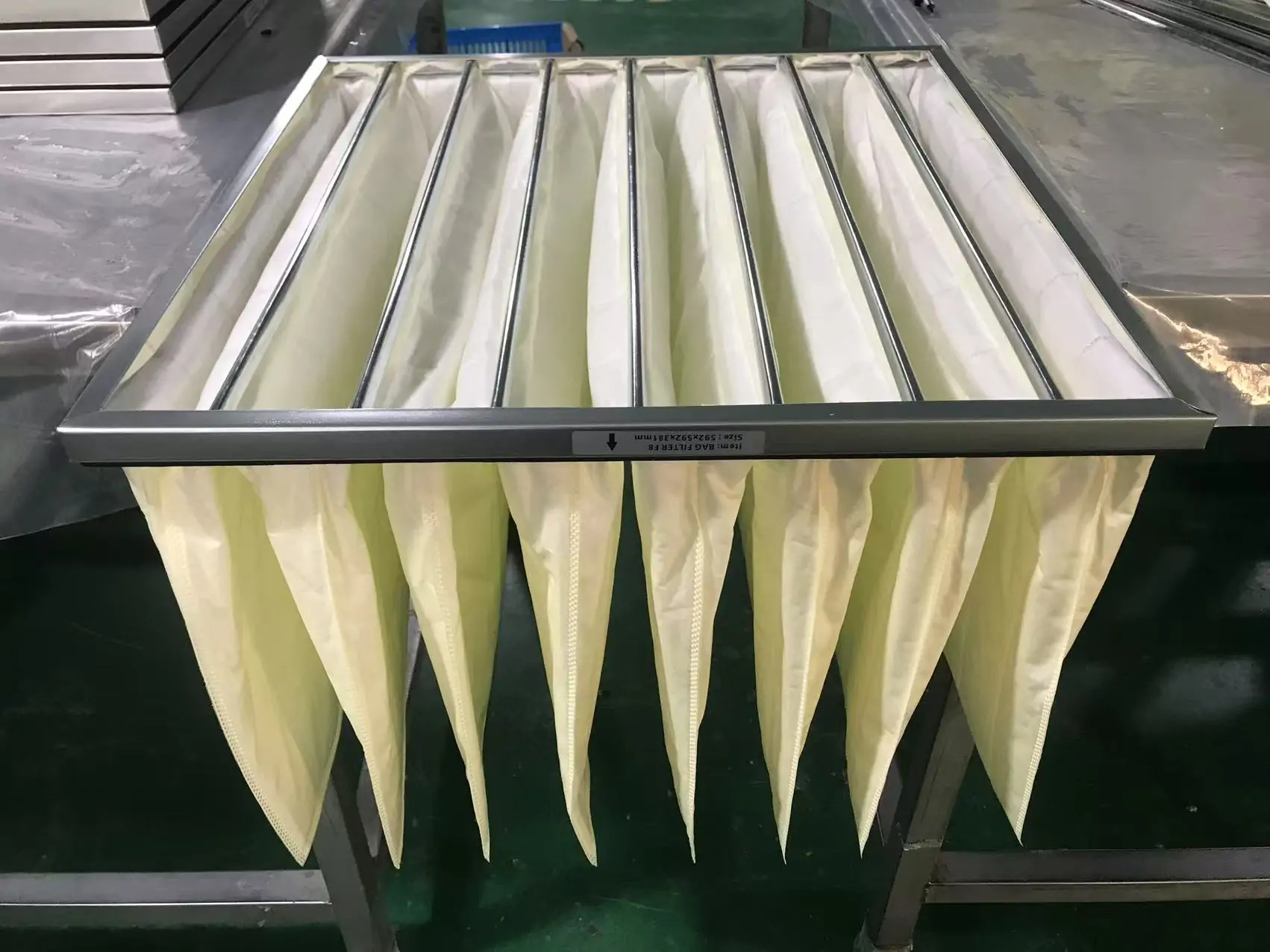
Bag filters, also known as pocket filters , use deep fabric or synthetic media pockets to provide a large filtration area. Under suitable conditions, this design can offer high dust-holding capacity and relatively low airflow resistance.
However, conventional HVAC systems do not always operate at constant airflow.
In variable air volume (VAV) systems, airflow can fluctuate according to building occupancy, cooling demand, and ventilation requirements. As airflow changes, flexible filter pockets may repeatedly inflate and relax.
This creates a potential limitation: the effective filtration area of a bag filter depends partly on how well its pockets maintain their intended shape.
Repeated deformation and contact between pockets may also contribute to mechanical wear over time, depending on the filter design and operating conditions.
V-bank compact filters take a different approach. Their rigid frames and fixed pleated media maintain a stable geometry without relying on airflow to keep the filter structure open.
The fundamental difference is structural: bag filters rely on flexible pockets, while compact filters maintain a fixed filtration geometry.
In applications where airflow fluctuates frequently and equipment space is limited, this difference can influence filter performance, maintenance requirements, and overall system efficiency.
2. Why Are V-Bank Compact Filters Becoming More Attractive?
For HVAC equipment manufacturers and system designers, three advantages are particularly important.
Higher filtration area within a limited space
When installation depth is restricted, a V-bank design can accommodate a large amount of filter media without requiring the deep pockets used in conventional bag filters.
This makes compact filters attractive for air handling units (AHUs) where equipment dimensions and internal space utilization are critical.
Stable structure under changing airflow
Because compact filters use rigid frames and fixed pleats, their geometry is less dependent on airflow conditions.
This can provide more consistent structural performance in systems where airflow changes during operation.
Potential energy and maintenance benefits
A well-designed compact filter may offer a competitive initial pressure drop and high dust-holding capacity.
Depending on the media, filtration efficiency, airflow rate, and dust-loading conditions, these characteristics may help reduce fan energy consumption or extend service intervals.
However, these benefits are not automatic. Actual performance must be verified using comparable operating conditions and product test data.
3. Bag Filters vs. V-Bank Compact Filters: A Technical Comparison
The following figures illustrate typical reference ranges for comparing the two designs.
| Parameter | Bag Filters | V-Bank Compact Filters |
|---|---|---|
| Typical initial pressure drop | 100–150 Pa | 70–120 Pa |
| Indicative dust-holding capacity | 300–600 g | 600–1,200 g |
| Filter structure | Flexible deep pockets | Rigid V-shaped pleated media |
| Structural stability | Depends partly on pocket inflation | Fixed geometry |
| Space utilization | Depends on pocket depth and configuration | High media area within a compact footprint |
| Typical selection considerations | Deep filtration area and dust-holding capacity | Compact installation and high airflow capacity |
Note: These are indicative figures, not universal product specifications. Actual results vary with filter efficiency, dimensions, airflow rate, media type, and test methodology. Dust-holding capacity and pressure drop should only be compared directly when the products are tested under equivalent conditions.
The table highlights why compact filters are becoming more competitive in certain applications. Nevertheless, lower initial pressure drop or higher dust-holding capacity alone does not establish which filter will deliver the lowest lifetime operating cost.
For a fair comparison, buyers should also consider the pressure-drop curve as the filter loads with dust, the recommended final resistance, the replacement interval, and the fan's operating characteristics.
4. Is the Replacement Driven by Filtration Efficiency?
Not entirely.
Filtration efficiency remains essential, but it is only one part of the selection process.
Two filters with similar efficiency ratings may have very different pressure drops, dust-holding capacities, physical dimensions, and service lives.
For this reason, HVAC filtration decisions increasingly require a system-level assessment rather than a comparison of individual specifications.
The most relevant factors include:
- Initial and average operating pressure drop: These affect the energy required to move air through the filter.
- Dust-holding capacity: This influences how much dust the filter can retain before reaching its specified terminal resistance.
- Available installation space: The filter must fit the existing housing or air handling unit.
- Maintenance requirements: Replacement frequency and labor costs affect long-term operating expenses.
- Total cost of ownership: Purchase price, energy use, transportation, and maintenance should be evaluated together.
A compact filter may be the better choice when space is limited and airflow conditions favor its design. A bag filter may remain competitive when its media area, dust-holding capacity, and operating characteristics better match the application.
The objective is not to choose the most compact product, but to select the filter that delivers the required performance at the lowest practical lifecycle cost.
5. What Does This Mean for the Future of Bag Filters?
The growing adoption of compact filters does not mean bag filters have lost their value.
Instead, the market is becoming more application-specific.
In conventional commercial HVAC systems with fluctuating airflow or limited installation space, V-bank compact filters may offer a more suitable combination of structural stability, space efficiency, and operating performance.
Bag filters, however, can remain attractive where their deep-pocket design, filtration characteristics, and overall economics meet the requirements of the system.