Pocket Filter Manufacturing Methods: Sewing, Heat Sealing and Ultrasonic Welding
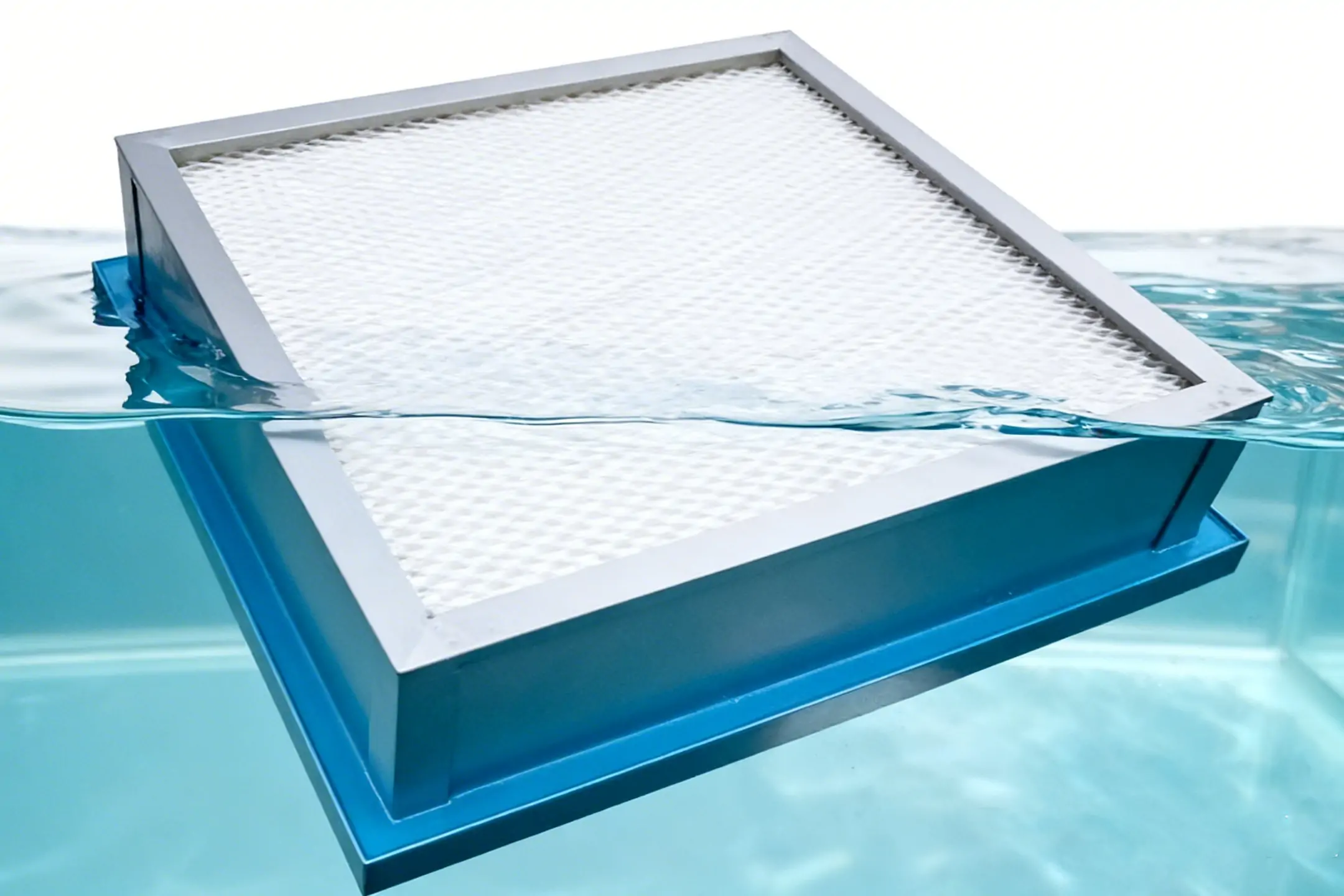
Pocket filters are widely used in HVAC systems, commercial buildings, and industrial air handling units. Their manufacturing methods vary according to the filter media, required filtration efficiency, and production requirements.
Three joining methods are commonly used in pocket filter manufacturing: sewing, heat sealing, and ultrasonic welding. Each method is suited to different filter materials and product specifications, influencing seam construction, production efficiency, and the achievable filtration grade.
1. Heat Sealing for Synthetic Fiber Nonwoven Pocket Filters
Synthetic fiber nonwoven pocket filters are manufactured using heat sealing, which joins compatible filter media through controlled heat and pressure rather than stitching with thread.
This process creates bonded seams without needle holes, helping maintain seam integrity and reduce potential air leakage through the joined areas.
Heat-sealed synthetic fiber nonwoven pocket filters can achieve filtration grades from F5 to F9, depending on the filter media, construction, and final product performance.
Heat sealing is therefore an important manufacturing option for medium- and higher-efficiency HVAC pocket filters. The process requires suitable sealing equipment and filter media with appropriate thermal bonding properties.
2. Sewing for Fiberglass Pocket Filters
Sewing is an established method for manufacturing fiberglass pocket filters. The filter media is stitched together to form the individual pockets, with the seam design adapted to the material's characteristics.
Fiberglass filter media requires careful handling during production. Appropriate sewing techniques help maintain the integrity of the material while producing structurally stable filter pockets.
Sewn fiberglass pocket filters can achieve filtration grades from F5 to F9, depending on the selected media and the performance of the finished filter.
One advantage of sewing is its relatively low equipment investment. Conventional sewing machines are widely available, allowing manufacturers to establish production with less specialized equipment than is required for ultrasonic welding.
3. Ultrasonic Welding and Sewing for Polyester Pocket Filters
Polyester pocket filters can be manufactured using either ultrasonic welding or conventional sewing, with different filtration grades available for each construction.
Ultrasonic-Welded Polyester Pocket Filters: M5–M6
Ultrasonic welding uses high-frequency mechanical vibrations to bond compatible polyester filter materials. The process does not require needles or sewing thread, eliminating needle holes along the welded seams.
Compared with conventional sewing, ultrasonic welding can offer higher production efficiency in suitable manufacturing setups. It is used for polyester pocket filters in M5 and M6 filtration grades.
The process requires specialized equipment, appropriate tooling, and compatible filter media.
Sewn Polyester Pocket Filters: G4
Conventional sewing remains an option for polyester pocket filters, particularly for G4 products.
Sewing machines are widely available and relatively accessible to small manufacturers. However, in this product category, sewn polyester pocket filters are associated with the G4 grade, while ultrasonic-welded versions are used for M5 and M6 grades.
This distinction makes the joining method an important consideration when selecting polyester pocket filter products.
4. Pocket Filter Materials, Joining Methods and Filtration Grades
The following table summarizes the relationship between filter media, manufacturing method, and filtration grade.
| Filter media | Joining method | Filtration grade |
|---|---|---|
| Synthetic fiber nonwoven | Heat sealing | F5–F9 |
| Fiberglass | Sewing | F5–F9 |
| Polyester | Ultrasonic welding | M5–M6 |
| Polyester | Sewing | G4 |
The filtration grade is determined by the filter media and the performance of the finished product, not by the joining method alone. The joining process must provide suitable seam integrity and avoid compromising the filter's overall performance.
5. Equipment Requirements and Production Efficiency
Equipment investment is another factor when choosing a pocket filter manufacturing process.
Sewing machines are widely available and generally require a lower initial investment. This makes sewing accessible to smaller factories producing sewn polyester or fiberglass pocket filters.
Heat-sealing equipment is required to bond synthetic fiber nonwoven filter media. The equipment and operating parameters must be compatible with the material and the intended seam design.
Ultrasonic welding systems require specialized machinery and tooling. Although the initial investment is higher, ultrasonic welding can provide efficient, repeatable production of compatible polyester pocket filters.
Manufacturers should consider the target filtration grades, material compatibility, production volume, equipment costs, and quality requirements when selecting a manufacturing process.
Conclusion
The appropriate pocket filter manufacturing method depends on the filter material and required filtration grade.