2025-03-28
Bag Air Filter Selection Guide: Materials, Accuracy, and Sealing - Become an Expert in 3 Key Points
Today, people want high-quality air. Bag filters are used in many places because they work well. You can find them in big factories, office buildings, and home air systems. But there are many kinds of bag filters. It can be hard to choose the right one. This article will refer to three important things: materials, accuracy, and sealing. This will help you understand how to choose a bag air filter.
Materials: How They Affect Bag Air Filter Performance and Life
Filter Materials
The filter material is the most important part of a bag air filter. It affects how well the filter works and how long it lasts. Common materials include fiberglass, synthetic fiber, and non-woven fabric.
-
Fiberglass: Glass fiber filter material has a very high filtration efficiency. It can catch tiny particles, even those as small as 0.3 microns. It has excellent high-temperature resistance and can work stably in an environment of 200℃ or even higher. Fiberglass filters are used in places where clean air is critical, like factories that make computer chips and hospital operating rooms. In these places, even tiny dust particles can cause problems. Fiberglass filters provide good protection.
-
Synthetic Fiber: Synthetic fiber bag filters are relatively low-cost and have good strength and chemical resistance. Its filtration efficiency varies according to different processes and fiber structures, and it is widely used from primary to middle effect. In the ventilation systems of some industrial plants and commercial buildings, synthetic fiber bag air filters are more common. Such places have relatively less stringent air quality requirements, and synthetic fiber filters can effectively reduce operating costs while meeting filtration needs.
-
Non-woven Fabric: Non-woven filter materials have good air permeability and affordable prices, and are usually used for medium-effect filtration. It typically consists of high-performance synthetic fibers that filter dust and impurities with particles larger than 0.4 microns. It can also be combined with activated carbon cloth to form activated carbon bag filter. In the fresh air system, the non-woven filter can be used as an intermediate filter device to reduce the burden of subsequent fine filtration.

Frame Materials
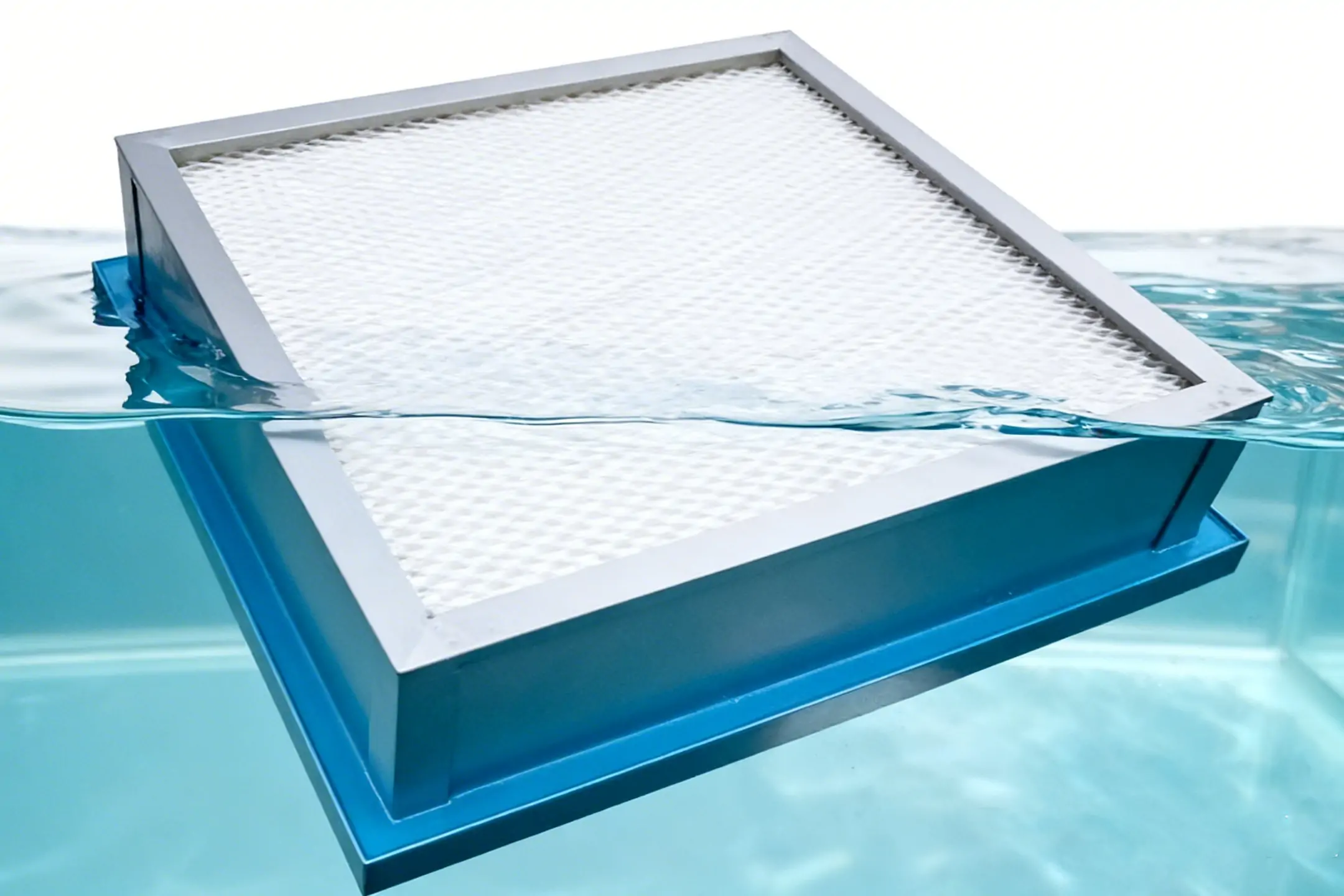
The frame holds the filter material. It also affects how well the filter seals and how long it lasts. Common frame materials are aluminum alloy, galvanized steel, and plastic.
-
Aluminum Alloy: This material is light but strong. It doesn't rust easily. It looks good and is easy to work with. It is used in places where appearance and performance are important, like high-end office buildings and shopping malls. In these places, the filter should look good and work well. Aluminum alloy frames meet these needs.
-
Galvanized Steel: This material is strong and doesn't rust easily. It is cheaper than aluminum alloy. It is often used in factories and warehouses where cost is important. In these places, filters need to handle a lot of air and tough conditions. Galvanized steel frames make sure the filters are strong and reliable.
-
Plastic: This material is light and cheap. It can resist some rust. But it is not as strong as other materials. It is usually used for small air filters or in places where strength is not important, like home air cleaners.
Accuracy: Matching Air Quality Needs for Different Places
Filtering accuracy measures how well a bag filter works. It shows the size of particles that the filter can catch. According to international standards, bag filters are classified into four levels of accuracy: basic, medium, high-medium, and high.