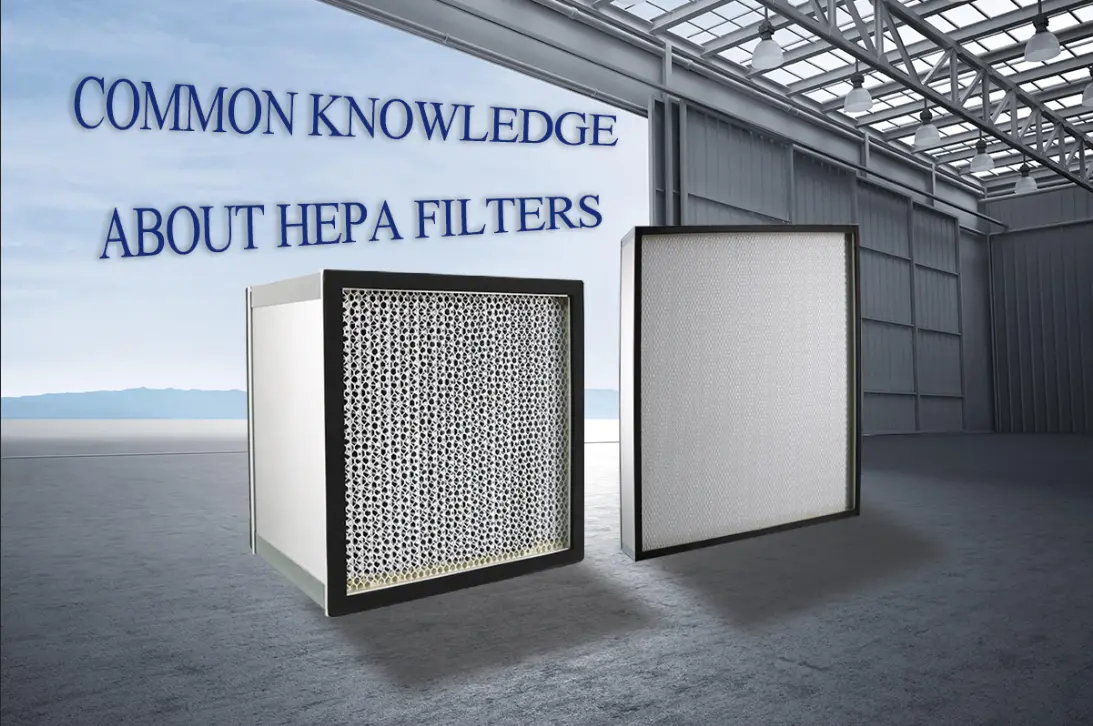
Common Knowledge About HEPA Filters
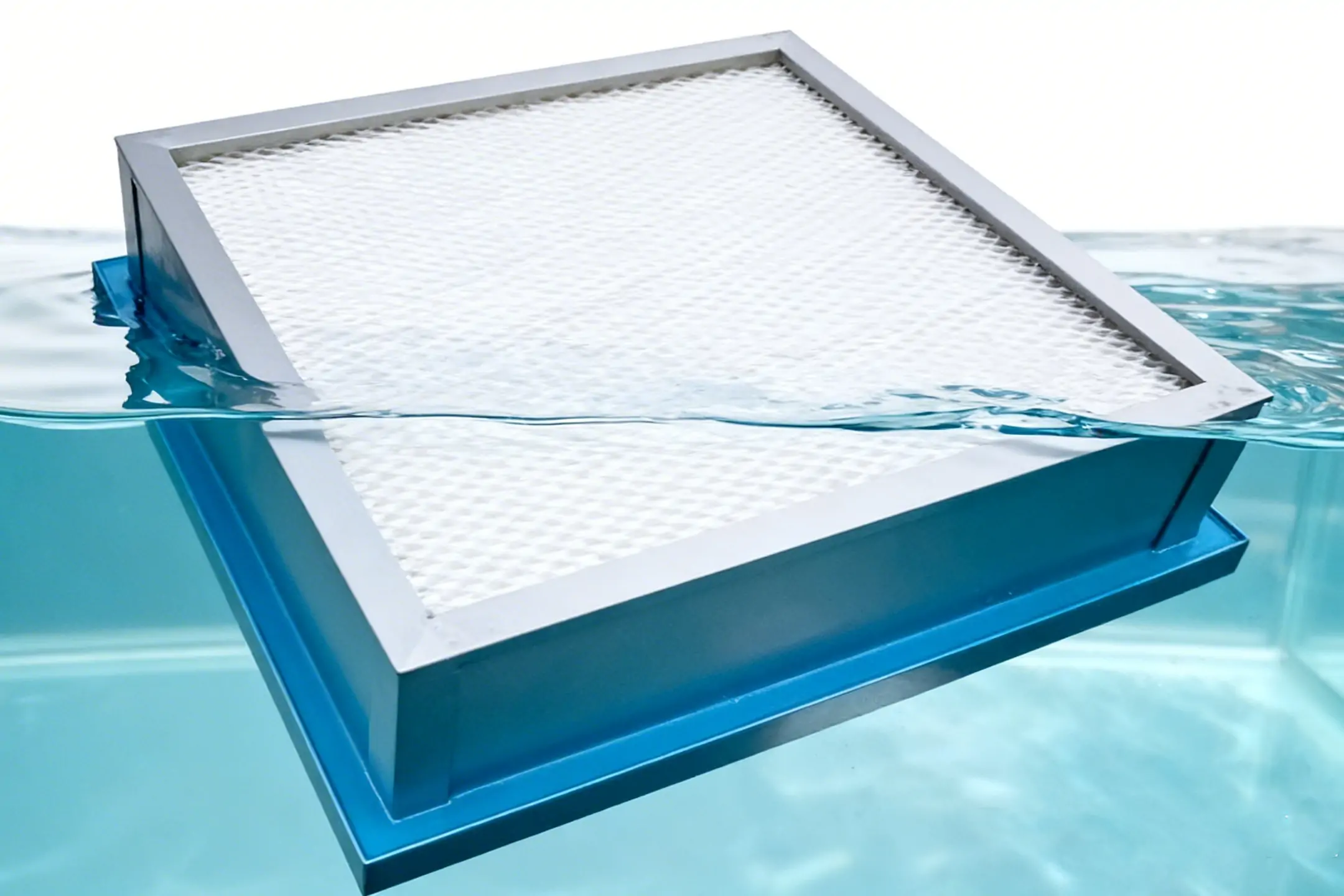
HEPA filters are essential components in cleanroom engineering, precision manufacturing, pharmaceutical production, biotechnology, hospitals, and industrial air purification systems. As global standards for air cleanliness continue to rise, HEPA filter performance—including airflow resistance, media structure, dust-holding capacity, and efficiency—has become a crucial factor in selecting filtration products.
Despite their widespread use, many users still have questions about HEPA filter specifications, such as the differences between deep pleated and mini pleated structures, the meaning of nominal vs. actual dimensions, and how various filter efficiency levels are defined. This guide explains these concepts clearly for purchasing, engineering design, and system integration.
Q1:What types of HEPA air filters are available?
A:High efficiency filters can be categorized into deep pleat HEPA and mini pleat HEPA types.
Characteristics of Deep Pleated HEPA Filters
Deep pleated HEPA filters use aluminum foil or cardboard as separators between pleats of fiberglass media. These separators maintain uniform spacing between pleats, preventing collapse under high airflow and ensuring consistent filtration performance. This is a traditional and highly reliable structure widely used in industrial applications.
One major advantage of deep pleated filters is their excellent temperature resistance. Because metal separators withstand high temperatures, deep pleated HEPA filters are commonly used in high-temperature clean ovens, paint baking rooms, and industrial heating processes.
- Excellent structural stability
- Uniform airflow channels
- High temperature resistance
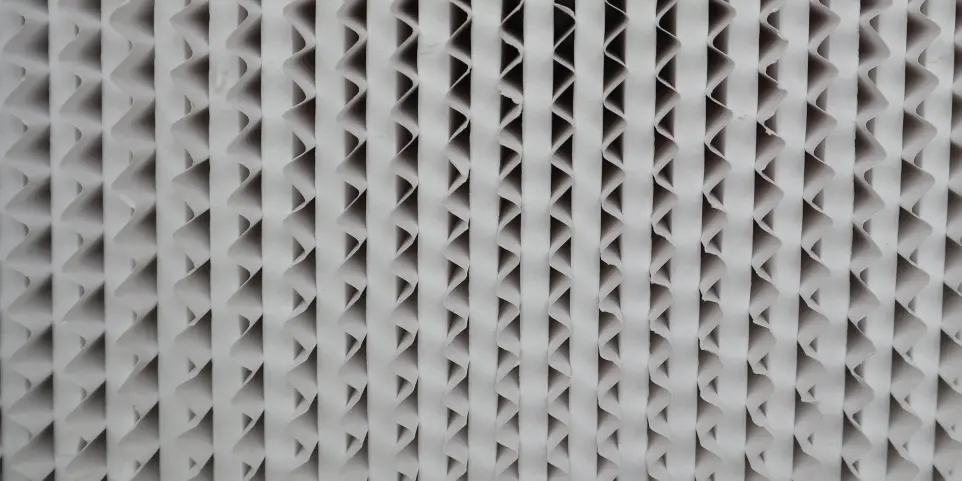
Characteristics of Mini Pleated HEPA Filters
Mini pleated HEPA filters use hot-melt adhesive as separators instead of metal or kraft paper. The adhesive forms wave-like spacing that keeps the pleats evenly distributed. Without metal separators, the filter becomes lighter and more compact, making it ideal for FFU units, cleanroom ceilings, pharmaceutical production equipment, and applications with limited installation space.
Mini pleated filters usually accommodate more media within the same frame size, resulting in greater dust-holding capacity and longer lifespan.
- More media area for extended service life
- Lighter and more compact
- Ideal for limited-space cleanroom installations
Q2: What are the actual dimensions and nominal dimensions of a HEPA filter?
A: Nominal dimensions refer to the filter including the outer frame and filter media, while actual dimensions typically exclude the outer frame, calculating only the width, height, depth, and area of the filter media.
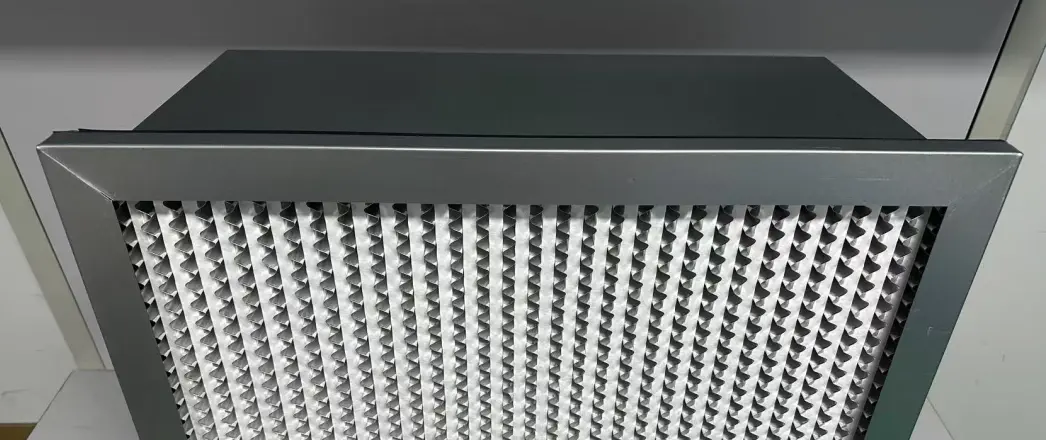
What Is Nominal Size?
Nominal size refers to the external dimensions of the filter, including the frame width, height, and depth. These dimensions are used for installation design, equipment compatibility, and standard catalog reference.
What Is Actual Size?
Actual size refers to the internal effective filter media dimensions. It includes the usable width, height, pleat depth, and media area. Two filters may share the same nominal size but have different actual media areas, resulting in differences in airflow resistance, efficiency stability, and service life.
Q3: What are the pleat count, pleat height, and effective filtration area of a HEPA filter?
A: One of the key performance indicators of a high-efficiency filter is the unfolded area of its filter paper. The larger the filter paper area, the lower the filtration resistance at the same airflow rate, resulting in a longer service life.
The pleat height of a deep pleated filter is typically 30 to 34 mm shorter than its nominal height to accommodate the separator and adhesive frame structure. For mini pleated filters, the actual filter area is primarily determined by factors such as pleat height, hot-melt adhesive wave spacing, and filter paper tension. Although filters may share identical nominal dimensions, differing filter paper areas impact filtration performance, resistance, and lifespan. Therefore, evaluating filter performance should not rely solely on frame dimensions; filter paper area is the critical factor.
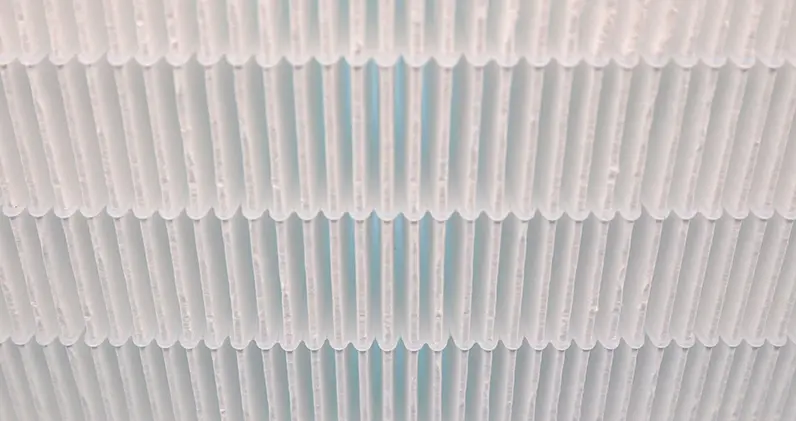
Regarding filter paper structure, the pleat count calculation differs between deep pleated and mini pleated filters. For deep pleated filters, pleat count is typically determined by the separator curvature and filter paper tension, with a standard separator curvature of approximately 4 mm. Reducing the separator curvature increases pleat count. Still, overly loose assembly causes uneven airflow distribution, compromising filtration efficiency. For mini pleated filters, the pleat count depends on the filter paper pleat height and the hot-melt adhesive wave spacing. Denser pleating increases effective filtration area, but excessive density raises air resistance and may reduce airflow. Thus, the pleating process is a critical factor determining product lifespan.
For HEPA filter manufacturers, we employ high-efficiency filters with wide pleat spacing for customers with limited budgets.
Q4: What are The Test Filter and Final Filter?
A: In filter testing, the test filter refers to the filter being evaluated for efficiency, resistance, and dust-holding capacity.
The final filter captures the artificial dust passing through the test filter to verify filtration performance.
Q5: What Is Rated Airflow?
Rated airflow represents the volume of air a filter is designed to handle per hour under standard resistance conditions. Exceeding the rated airflow may increase pressure drop, reduce filtration efficiency, and accelerate filter aging, making correct airflow matching essential for system design.
Q6: What Is Dust Holding Capacity?
Dust-holding capacity refers to the amount of artificial dust the filter can hold before reaching its final resistance. Higher dust-holding capacity indicates longer service life and lower energy consumption. Media area, pleat structure, and material density are major factors influencing dust-holding performance.