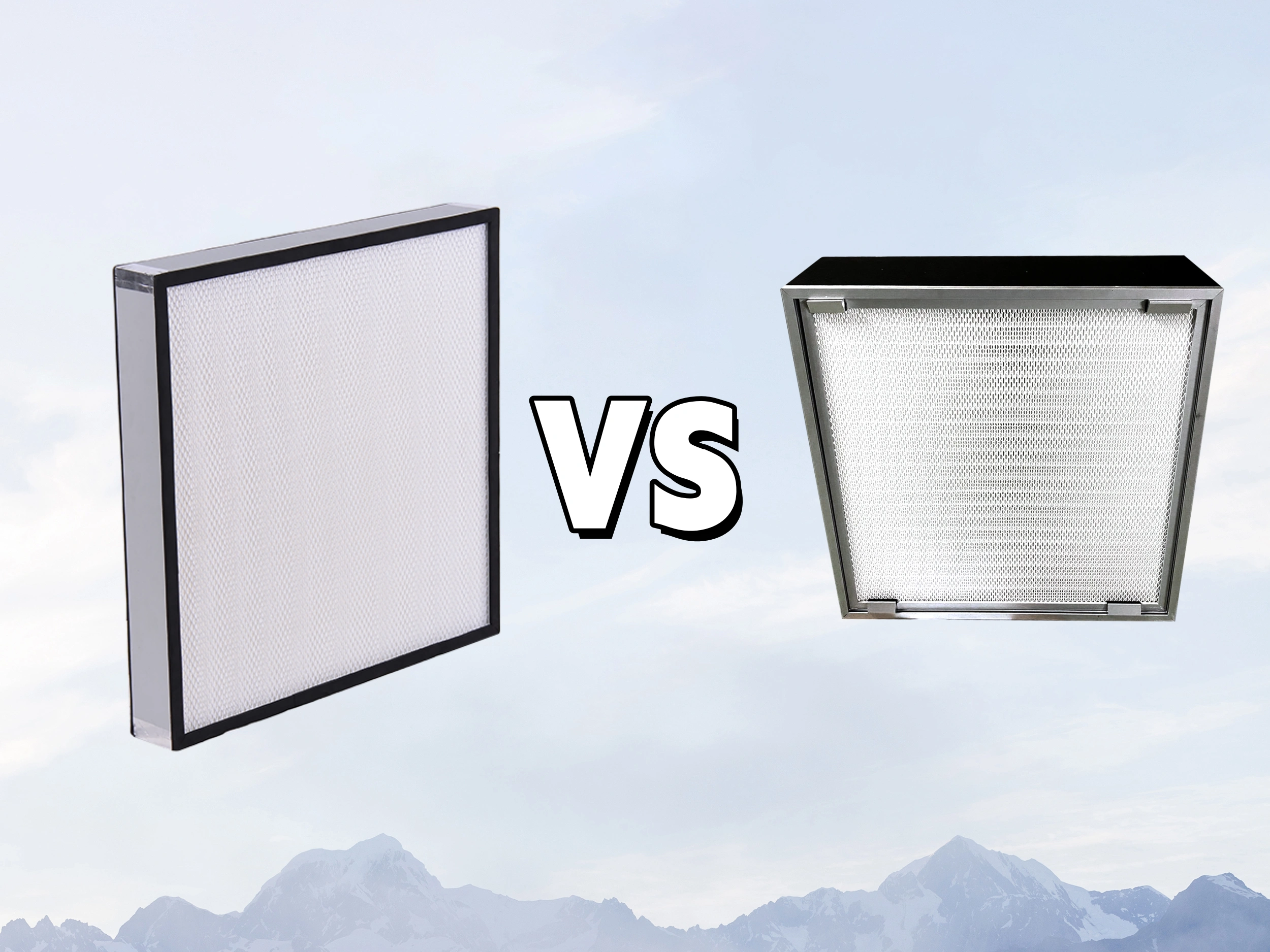
Disposable HEPA Filter vs Mini Pleated HEPA Filter
In the air filtration industry, few topics create more confusion than the relationship between disposable HEPA filter units and mini pleated HEPA filters.
Many buyers assume they are two completely different filtration products. Others compare their airflow ratings and believe one must be more powerful than the other. In reality, the difference is not about filtration efficiency at all — it is about structural design.
Understanding this relationship is essential, especially for HVAC contractors, duct manufacturers, and companies expanding into cleanroom-level filtration systems.
What Is Mini Pleated HEPA Filter?
At the heart of most modern high-efficiency filtration systems is the mini pleated HEPA filter.
The mini pleated filter is constructed using ultra-fine glass microfiber media arranged in closely spaced pleats separated by hot-melt adhesive. This structure maximizes effective filtration area within a compact frame, allowing high airflow with controlled pressure drop.
When manufactured according to EN 1822, a mini pleated HEPA filter can achieve H13 or H14 efficiency levels, capturing ≥99.995% of MPPS particles in the case of H14 classification.
This mini pleated element is the actual filtration component, which the part that performs particle capture.
Everything else is structure.

What Is a Disposable HEPA Filter Unit?
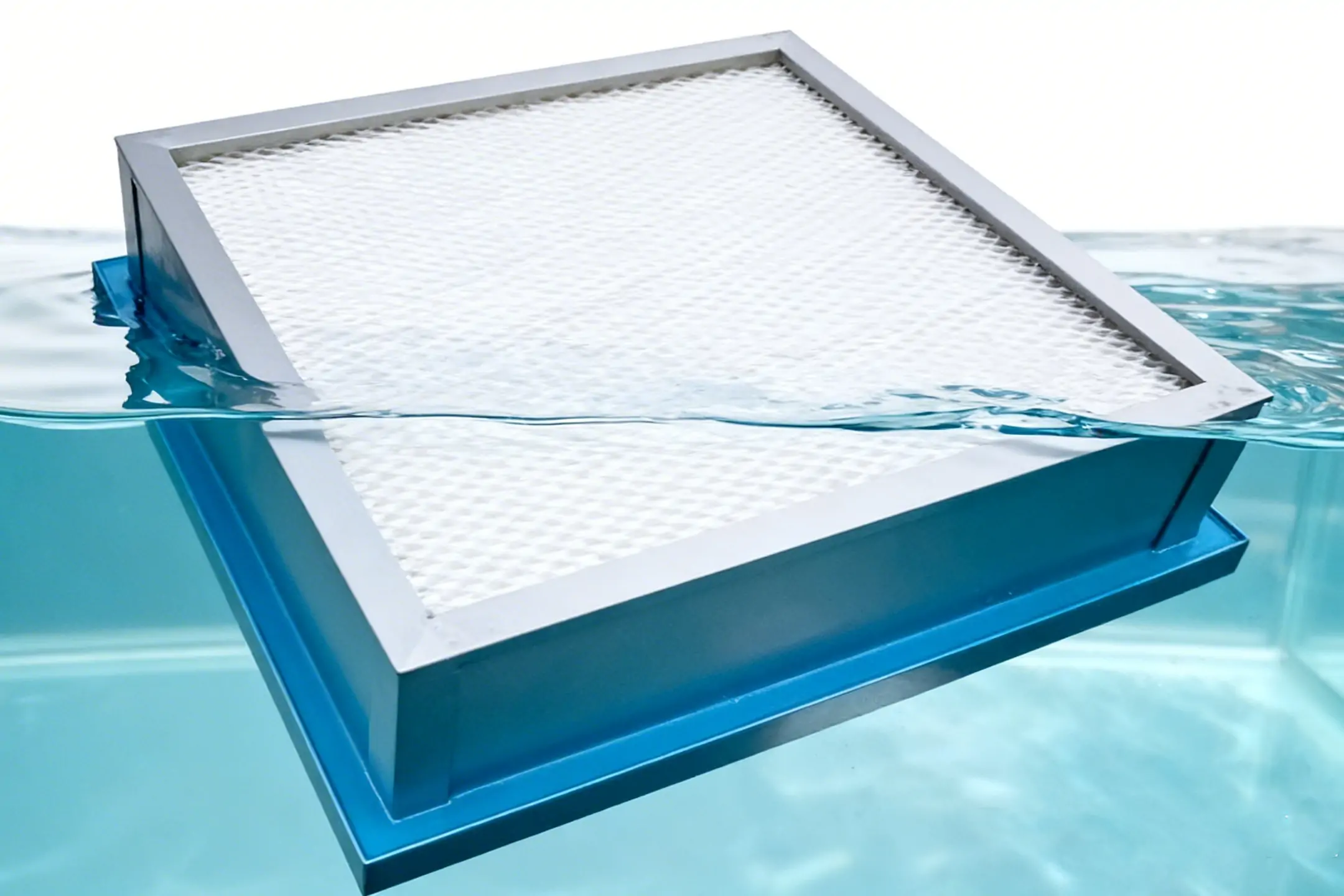
A disposable HEPA filter unit does not introduce a new filtration technology. Instead, it integrates the mini pleated HEPA filter into a metal housing. In other words: The disposable HEPA unit is a structural assembly. Inside it, you will still find a mini pleated HEPA filter.
The housing serves several purposes:
- Providing mechanical stability
- Simplifying installation
- Allowing direct mounting without additional filter boxes
- Enabling full-unit replacement when clogged
From a filtration standpoint, both products may use identical glass microfiber media and achieve the same H14 efficiency level. The difference lies in how they are installed and replaced.

Why Airflow Ratings Often Cause Confusion
A common situation occurs when buyers compare two products with the same external dimensions and notice very different airflow ratings. This leads to the assumption that one filter is “stronger” or “more efficient.”
However, airflow is not determined by efficiency class alone. In a standalone mini pleated HEPA filter, the entire depth can be used for filtration media. This maximizes effective surface area and allows higher airflow under the same resistance conditions.
In a disposable HEPA unit, part of the depth is occupied by the housing structure. The internal space available for pleated media is therefore reduced. Less effective filtration area results in lower rated airflow. So even though the external size appears identical, internal design changes performance characteristics. This is a structural difference, not a filtration difference.
Element Replacement VS Complete Unit Replacement
With a mini pleated HEPA filter installed inside a separate housing or terminal box, only the filter element is replaced when the pressure drop reaches its final resistance. With a disposable HEPA filter unit, the entire assembly housing is removed and replaced.
This approach simplifies service but changes cost structure and airflow specification. The choice between the two is not about which one filters better. It is about system design, maintenance preference, and installation constraints.
Why Understanding This Relationship Matters
For manufacturers of air ducts and diffusers expanding into HEPA-level products, misunderstanding this structural relationship can lead to:
- Incorrect airflow assumptions
- Installation compatibility issues
- Improper system design
- Customer dissatisfaction
Many technical questions we receive are not about efficiency grades like H14. They are about structure, airflow capacity, and application fit.
Manufacturer Perspective
As a professional HEPA filter manufacturer, we produce both standalone mini pleated HEPA filters and disposable HEPA filter units using high-quality glass microfiber media.
All H14 models are manufactured in accordance with EN1822 requirements, including individual leak testing and airflow performance verification.
Whether you require higher airflow capacity or simplified installation, the right solution depends on system design rather than solely on energy efficiency ratings.
If you are unsure which configuration best fits your project, technical consultation before ordering can prevent costly selection errors.