How can high-temperature filters safeguard production line in extreme environments?
Instead of fast food fashion concept, vetiver is based on the idea of the wearer, not limited to the scope of age or season. At every time of the day, every region and every place can freely change and connect smoothly. Vetiver skillfully combines leisure style and soft multi-functional materials to create a clothing piece valued by fearless and confident women.
Our take on the modern prairie dress, the sweet Vetiver dress has a V-neckline, fitted bodice, and puff sleeves with 3/4 length smocked cuffs. The romantic sleeves are beautifully complimented by the ruffled tier finishing the hem. She is oh so perfect for summertime picnics or just frolicking in the dappled sunshine.
In modern industrial manufacturing, many critical processes rely on high-temperature environments. However, extreme heat poses a severe challenge to air filtration systems. When traditional filters fail under high temperatures, they not only fail to deliver clean air but may also contaminate products through melted or detached filter media, resulting in substantial losses. This article delves into the core component of high-temperature air filters, revealing how they ensure the safety of your production lines even under the most demanding conditions.
What Makes High-Temperature Filters So Special?
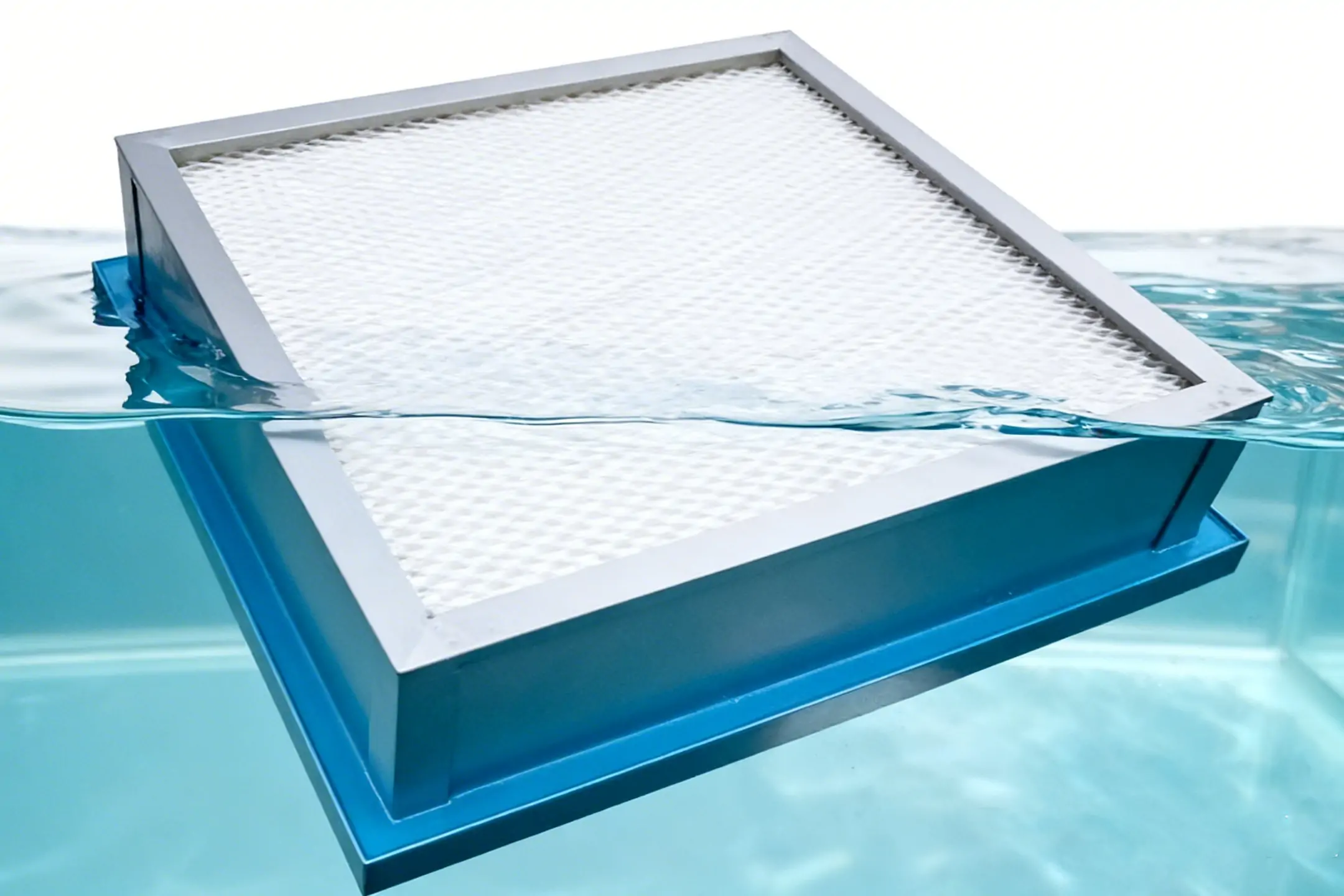
High-temperature air filters are not merely heat-resistant versions of standard filters. Their specialised nature is evident in every detail, designed to withstand continuous exposure to elevated temperatures.
Core Filter Media: High-temperature filters typically employ heat-resistant glass fibre filter paper or high-temperature-resistant inorganic fibres. These materials maintain structural integrity and filtration efficiency even in environments reaching 250°C or 350°C.
Framework and Sealing: Plastic frames in standard filters deform under high temperatures. Consequently, high-temperature filters employ robust stainless steel or aluminium alloy frames. Crucially, sealing utilises specially formulated heat-resistant silicone or ceramic adhesives, ensuring perfect airtight integrity between filter and frame throughout thermal expansion and contraction.
Manufacturing Process: From pleating to assembly, the entire production process strictly avoids any heat-sensitive adhesives, guaranteeing every component withstands extreme temperatures..
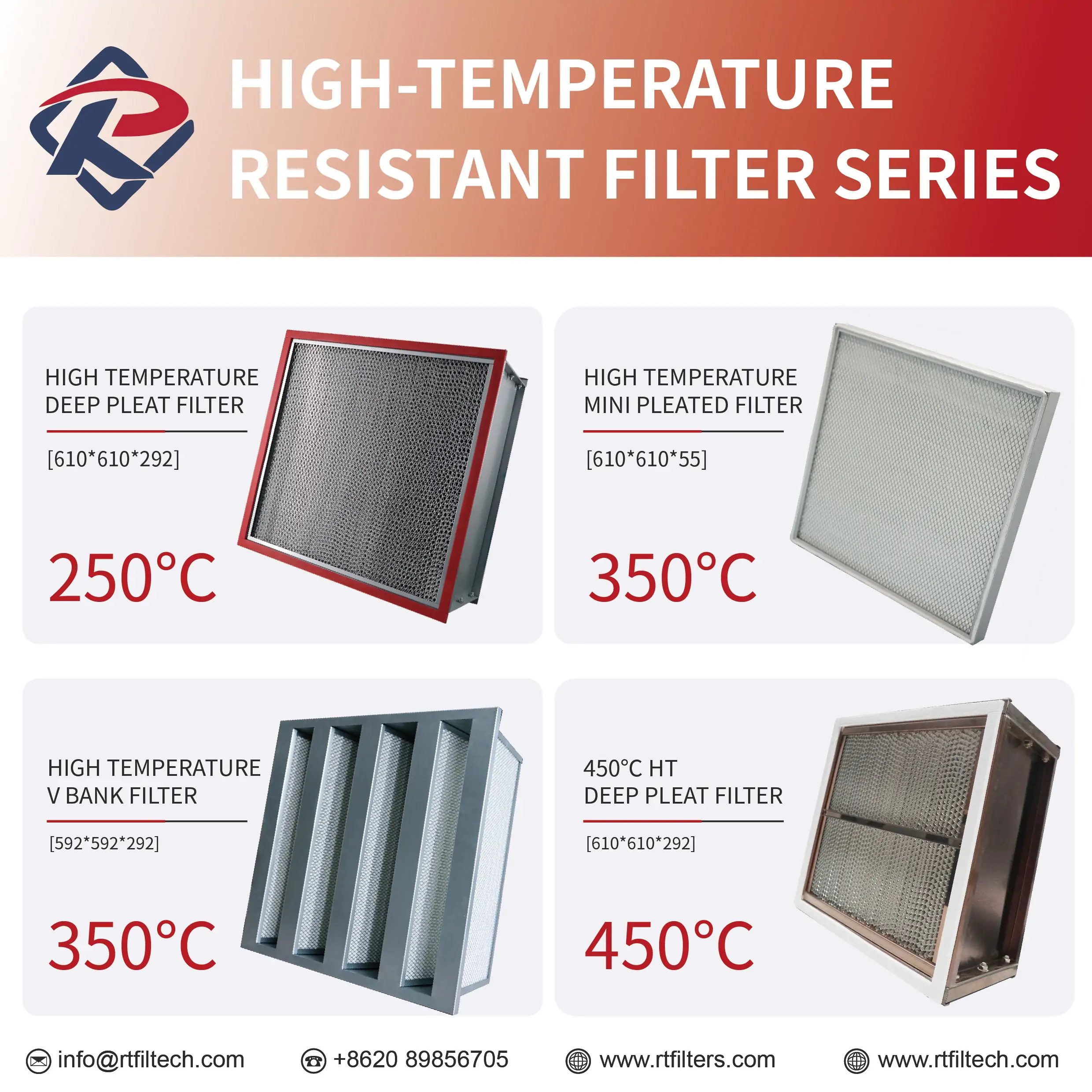
RT Air Filtech's Core Technologies and Product Showcase
Amongst numerous high-temperature filters, our RT Air Filtech high-temperature pleatless filter stands out through its unique innovative technology, offering a superior solution for air filtration in high-temperature environments.
Farewell to silicone, no fear of secondary contamination: Traditional filters rely on silicone for sealing, yet silicone may emit trace volatiles at elevated temperatures, causing secondary contamination in pharmaceutical, food, and electronics industries with stringent purity requirements. Our product employs a silicone-free sealing design, completely eliminating this risk.
Extended lifespan, low resistance: The non-pleated design maintains filtration area while effectively reducing initial resistance, lowering system energy consumption. Furthermore, we innovatively replace conventional hot-melt adhesive with high-temperature-resistant fibreglass strips to securely anchor the filter element. This prevents deformation or detachment caused by adhesive melting, significantly extending the service life of the high-temperature filter element.
Air-tightness assurance: Traditional silicone seals may fail after repeated thermal expansion and contraction at high temperatures. Our solution employs high-temperature resistant fibreglass cord for sealing. Its superior physical stability ensures perfect air-tightness between the filter and frame throughout the entire service life.
Multiple Key Applications of High-Temperature Filters
High-temperature air filters serve as the lifeline for numerous high-precision industrial processes, such as:
- Pharmaceuticals and Healthcare: Within pharmaceutical production ovens, drying chambers, and sterilisation passages, high-temperature filters ensure the final product remains sterile and pure
- Food processing: In industrial high-temperature filtration stages like bread baking and biscuit drying, they prevent product contamination from cooking fumes and microorganisms.
- Electronics and semiconductors: Within high-temperature cleanrooms for microelectronic component production, high-temperature filters are critical for maintaining product yield rates.
- Automotive Manufacturing: On high-temperature drying lines following vehicle painting, even the smallest particulate matter can ruin the entire painted surface, resulting in substantial rework losses. High-temperature filters ensure the air within the drying line meets the highest cleanliness standards, serving as the ultimate safeguard for automotive coating quality.
How to Select the Correct High-Temperature Filter?
As a procurement manager or engineer, selecting the correct high-temperature filter requires consideration of the following key parameters: maximum operating temperature, filtration efficiency rating, and sealing materials and construction. Opting for brands such as RT Air Filtech, which specialise in silicone-free, long-life, low-resistance designs, will be a pivotal decision in optimising production and reducing costs.