The Only Article You Need on High Temperature Filters
What is High Temperature Filter?
This article applies only to high temperature air filters. A high temperature filter is an air filtration product designed to operate reliably under extreme heat conditions where ordinary filters would melt, deform, or release contaminants. In industrial settings such as food processing, pharmaceutical production, painting booths, and electronic manufacturing, clean air must be maintained even when operating temperatures reach 250°C or higher.
Unlike standard filters, a high temperature air filter uses heat-resistant materials that maintain shape and efficiency during continuous exposure to heat. Its purpose is to capture fine particles, dust, and aerosols without degrading or releasing harmful substances under high thermal stress.
A high temperature HEPA filter offers even higher filtration efficiency, often used in environments requiring both heat resistance and ultra-clean air, such as sterilization tunnels or clean ovens. Every component — filter media, frame, sealant, and gasket — is designed to handle expansion and contraction at elevated temperatures.
What Material is Used in High Temperature Air Filters?
The material composition of a high temperature air filter determines not only how much heat it can withstand but also what level of filtration efficiency it can achieve. In fact, high temperature filters are divided into different efficiency grades — from primary to medium and high efficiency — each using specialized materials and structures to meet performance needs under heat.
- High-temperature primary efficiency filters are made from heat-resistant synthetic fiber or glass fiber. Both materials are fluffy and elastic, allowing them to effectively capture coarse dust particles while maintaining airflow. These filters are typically produced in a flat-panel style, offering a balance between low resistance and stable structure during long-term heat exposure.
- High temperature medium efficiency filters use pleated designs, available in both large-pleat and mini-pleat forms. The filter media is made from high-temperature glass fiber paper, which provides finer particle capture and stable efficiency. The pleated structure increases filtration area, making it suitable for continuous-use systems that operate at moderate to high heat levels.
- High efficiency high temperature filters (HEPA grade) use deep-pleated glass fiber filter paper as the core media. Between each pleat, corrugated spacer sheets made of aluminum foil or aramid paper are inserted to form uniform air channels and maintain shape under heat. The newly developed aramid paper from RT Air Filtech provides improved thermal stability, lower weight, and reduced risk of metal contamination.This is a important product for the electronics industry.
What is the Maximum Temperature for a HEPA Filter?
When discussing a high temperature HEPA filter, one of the first questions buyers ask is how much heat the filter can actually withstand. The answer depends on both the materials used and the manufacturing process, as even small differences in design can lead to significant performance variation.
In general, a standard HEPA filter operates safely up to around 80°C, which is suitable for cleanrooms and HVAC systems under normal conditions. However, a high temperature HEPA filter is engineered for environments that demand far greater thermal endurance. Most models are rated for continuous operation between 250°C and 350°C, and some specialized designs can withstand short peaks of up to 400°C.
The filter media in these high-grade models is made from high-density glass fiber paper, which resists both melting and deformation. The pleats are separated by aluminum foil or high-temperature aramid paper to prevent airflow blockage and ensure uniform filtration. The frame and sealant also play critical roles — stainless steel frames combined with silicone or ceramic adhesives maintain structural stability even when the filter is exposed to prolonged heat cycles.
It is important to note that the maximum temperature rating reflects continuous use, not short-term spikes. A filter rated at 300°C continuous use might briefly handle 350°C, but constant exposure above its design limit will accelerate aging and risk leakage.
How to Inspect the Production Quality of High Temperature HEPA Filters?
The reliability of a high temperature HEPA filter depends heavily on production quality. Unlike standard filters, these filters must withstand both high heat and strict filtration standards, so inspecting them requires careful attention to critical performance parameters.
The first step is to check airtightness and filtration efficiency. Any leakage or inconsistent pleat formation can compromise the HEPA filter’s ability to capture fine particles at elevated temperatures. High-quality manufacturers use specialized equipment such as smoke leak detectors, DOP (Dispersed Oil Particles) test systems, and MPPS (Most Penetrating Particle Size) test benches to ensure the filters meet strict HEPA standards.
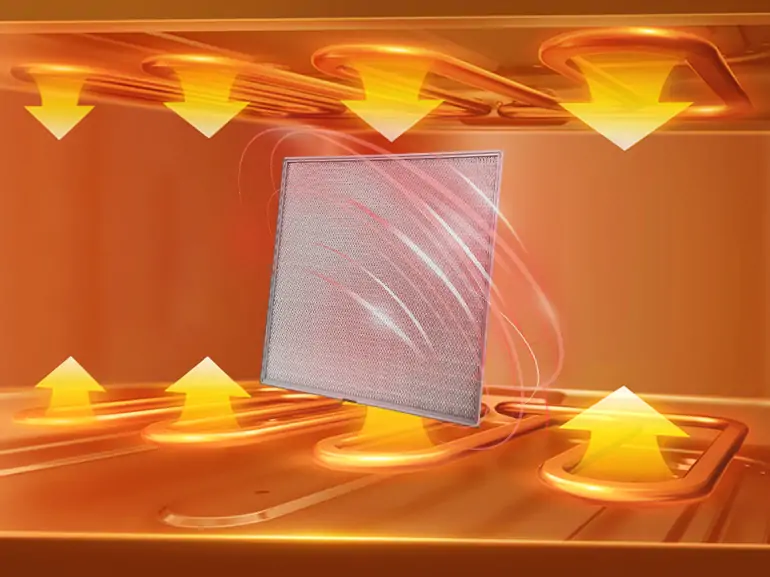
The second step is to verify high temperature performance. A high temperature HEPA filter must maintain structural integrity and filtration efficiency under continuous heat. RT Air Filtech, for example, employs high-temperature ovens to simulate operating conditions, confirming that filters can reliably withstand the rated thermal load without deformation or media breakdown.
Other practical considerations during inspection include checking the bonding of pleats with aluminum or aramid spacer sheets, and verifying the stability of the frame and sealant under gentle pressure. Properly manufactured filters will show no gaps, warping, or seal failures even after thermal testing.
Is a High Temperature Air Filter Worth It?
Investing in a high temperature air filter, especially a high temperature HEPA filter, is essential for industries operating under heat. While the initial cost is higher than standard filters, the benefits in reliability, long-term performance, and product protection far outweigh the expense.
These filters maintain structural integrity and filtration efficiency in high-temperature environments, preventing equipment contamination and reducing maintenance frequency. Choosing a high-quality supplier, like RT Air Filtech, ensures rigorous testing for airtightness, filtration efficiency, and heat resistance.
High temperature filtration plays a critical role in maintaining process stability and product quality in demanding heat environments. Choosing filters that combine reliable materials, precise construction, and thorough testing is essential. RT Air Filtech’s high temperature HEPA filters, featuring advanced glass fiber media and innovative aramid spacer paper, are designed and tested to meet these challenges, ensuring consistent performance even under extreme heat. Learn more about solutions from RT Air Filtech