What is PTFE, the New Air Filtration Material?
PTFE (Polytetrafluoroethylene) is a fluoropolymer material characterized by exceptional chemical stability, high-temperature resistance, and low surface energy. Due to its unique properties, it has seen widespread adoption in air filtration applications in recent years, particularly in high-efficiency air filtration scenarios. It has emerged as a significant alternative or upgrade option to glass fiber and PP meltblown fabric.
Why Is PTFE Suitable for Air Filtration?
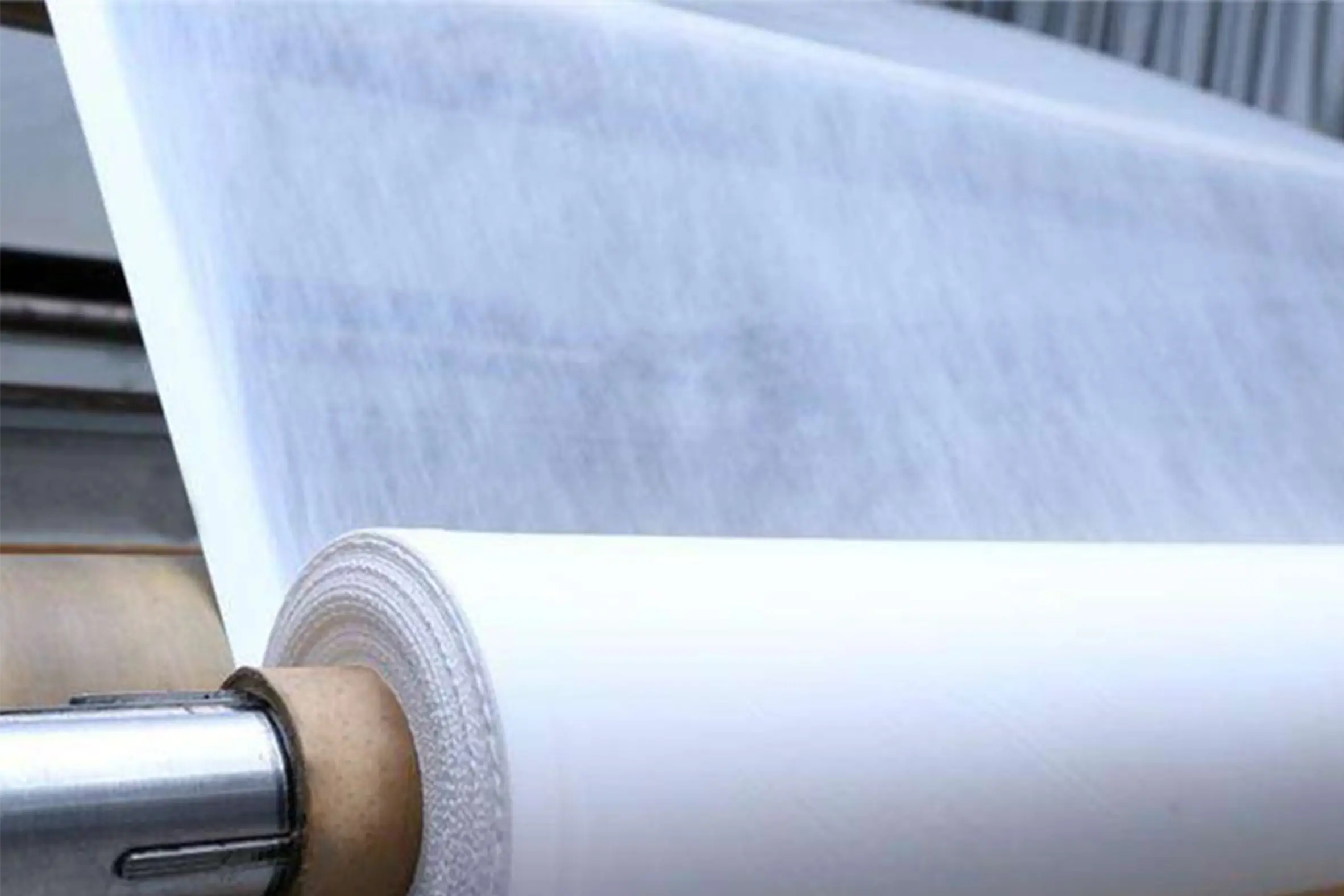
It features a unique surface filtration mechanism: Unlike traditional filter media that rely on dust forming a primary layer within the fibers (deep-layer filtration), PTFE-coated filter media incorporates an ultra-thin PTFE microporous membrane onto the base fabric. This membrane features uniformly distributed, minute pores that act like a precision sieve, directly intercepting particulate matter to achieve surface filtration. This enables the equipment to deliver high-efficiency filtration from startup, eliminating the initial low efficiency and dust penetration issues common with traditional filter media.
| Features |
Advantages |
|---|---|
|
Corrosion-resistant Inert materials
|
Resistant to corrosion by most acids, alkalis, organic solvents, and other chemicals |
|
Heat-resistant Cold-resistant |
The operating temperature range is wide, typically spanning from -200°C to 260°C, with some specifications reaching up to 300°C. |
|
Low friction coefficient Non-stick properties adequate mechanical strength |
The surface is smooth and resistant to contaminant adhesion, making it easy to clean. |
|
High filtration efficiency low airflow resistance |
Filtration efficiency for particles larger than 0.1 microns often exceeds 99.99%, while maintaining low resistance. |
Preparation Process of PTFE Microporous Membranes
- Blending: Mix PTFE resin powder with extrusion aids to enhance flowability;
- Extrusion and calendering: Extrude the mixture into rods or sheets, then calender into thin tapes;
- Degreasing: Remove the extrusion aid to obtain a dense PTFE base tape;
- Stretching and Pore Formation: Subject the base tape to bidirectional stretching (longitudinal + transverse) at a specific temperature. This stretches the PTFE molecular chains, creating numerous interconnected micropores (pore size controllable between 0.1–10 μm, porosity reaching 70%–90%);
- Setting: High-temperature treatment (above 300°C) fixes the microporous structure, yielding a stable PTFE microporous membrane.
Pure PTFE microporous membranes are thin and have low strength. In practical applications, they are typically combined with a support substrate to form composite filter media:
- Support layer: Commonly PET nonwoven fabric, glass fiber fabric, etc., providing mechanical strength;
- Functional layer: PTFE microporous membrane, responsible for filtration;
- Structural configurations: Typically a two-layer structure (support layer + PTFE membrane) or a three-layer structure (support layer + PTFE membrane + protective layer) (the protective layer prevents scratching).
What Are the Advantages and Disadvantages of Ptfe Membrane Filter Media Compared to Glass Fiber Filter Media?
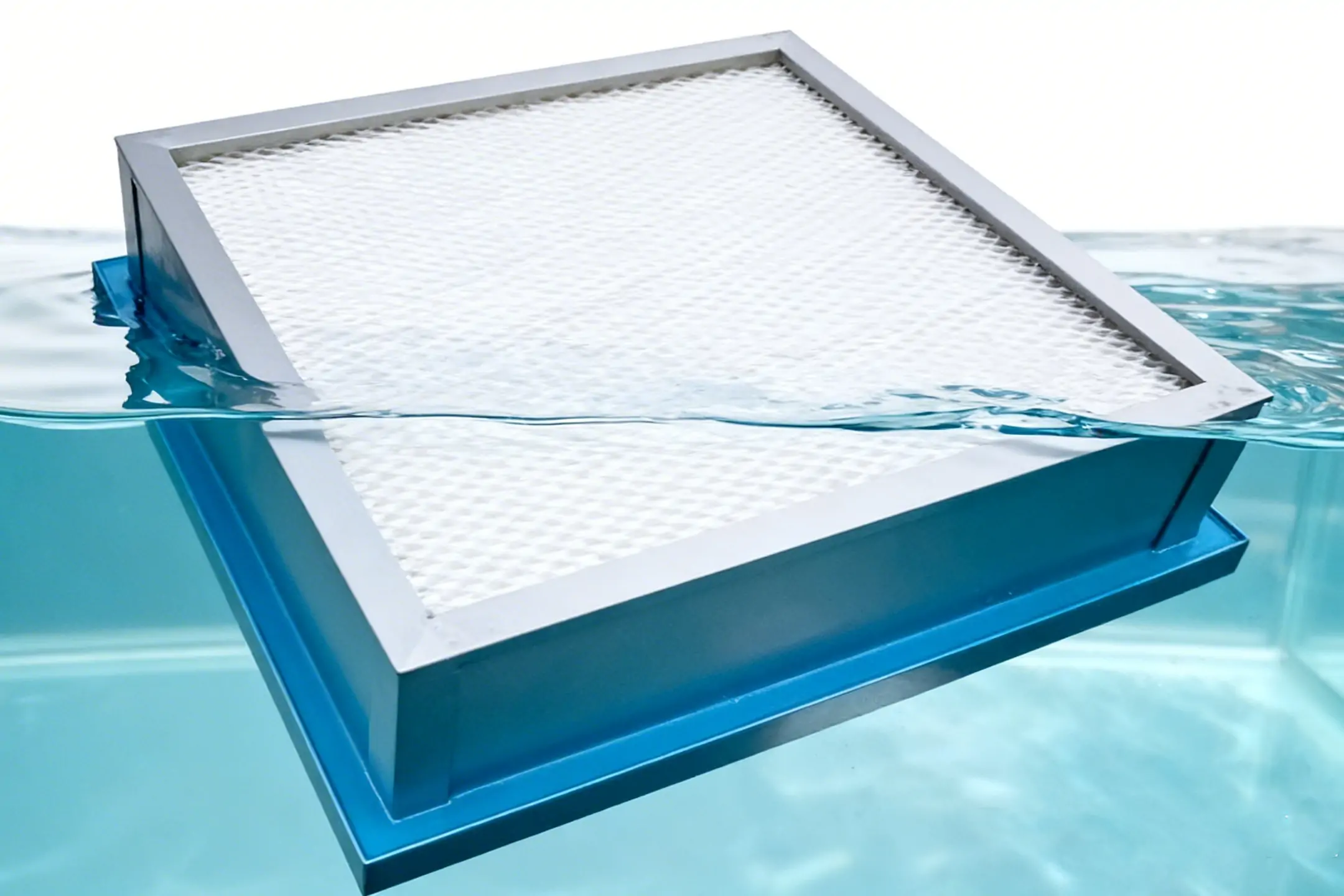
PTFE membrane filter media itself is ultra-thin, lacks a structural framework, and is prone to damage; it must be laminated with other porous substrates (polypropylene PP, polyester PET) to form a composite, creating a dual-layer filter media. During filter operation, to prevent long-term airflow from causing separation between the membrane and substrate, the substrate must serve as the air-exit side. For double-sided protection of PTFE media, an additional substrate layer is added to the non-substrate side of the PTFE composite media, creating a three-layer structure. However, this substrate layer does not participate in the composite process and serves only as a protective covering that can be easily removed.
Glass fiber possesses considerable strength, exceeding that of PTFE membrane but falling short of composite membrane filter media. It exhibits structural uniformity with consistent pore size distribution, ensuring laminar flow during air passage. PTFE membrane pores show greater fluctuation and less uniform pore size distribution. While multi-layer membrane structures can mitigate this, they significantly increase costs. PTFE exhibits high-efficiency, low-resistance filtration properties. PTFE membrane filter media operate on surface filtration with low dust-holding capacity; glass fiber filter media utilize depth filtration with higher dust-holding capacity. PTFE filter media have poor fire resistance and flame retardancy, whereas glass fiber filter media offer superior fire resistance and flame retardancy, and can achieve UL fire and flame retardancy certification. PTFE filter media are more expensive than glass fiber filter media.
How to Select the Right Filter Media for Different Applications?
Situations where PTFE filter paper is the preferred choice: If your project has explicit requirements for energy conservation and consumption reduction, operates in highly corrosive environments (involving acids, alkalis, or organic solvents), concerns about filter material damage during installation or transportation, or sensitivity to chemical gas volatilization, then PTFE is the superior option.
Areas where glass fiber filter paper retains advantages: In scenarios requiring ultra-high filtration efficiency (e.g., U17 and above), handling ultra-high-temperature flue gas, or projects with budget constraints and mild operating conditions, specially treated glass fiber filter paper remains a reliable and economical choice.
Notably, technological convergence is emerging. Composite filter media combining fiberglass as a base fabric for structural support with PTFE membrane overlay is now available, aiming to integrate both materials' strengths. This may represent a noteworthy future trend.
As a specialized manufacturer deeply rooted in the air filtration industry, we understand that every step—from premium raw materials to reliable finished products—directly determines the ultimate value of filtration solutions. We offer a one-stop service: controlling PTFE material quality at the source and custom-producing finished filters that meet various standards, including HEPA H13/H14 and ULPA.
Eliminate the need to coordinate multiple suppliers, and say goodbye to quality gaps and delivery delays. Through comprehensive technical oversight across the entire supply chain, standardized production processes, and flexible customization capabilities, we simplify your collaboration workflow, reduce procurement costs, and ensure efficient delivery. Whether you require bulk purchases of industrial-grade PTFE filter products or seek personalized air filtration solutions, our professional expertise positions us as your reliable partner.