Why Full-Room Laminar Airflow Is No Longer the First Choice for Cleanrooms
Understanding the Two Basic Airflow Patterns
Unidirectional airflow, often still referred to as laminar flow, drives air into parallel streams at a controlled velocity, typically between 0.36 and 0.54m/s. It creates a sweeping effect that carries particles directly out of the process area. When it works, it works very well.
In contrast, turbulent flow relies on mixing and dilution. Air is introduced at a lower velocity through diffusers, circulates within the space, and gradually removes particles through repeated air changes. This airflow pattern is less predictable than unidirectional flow, but its energy consumption is significantly lower.
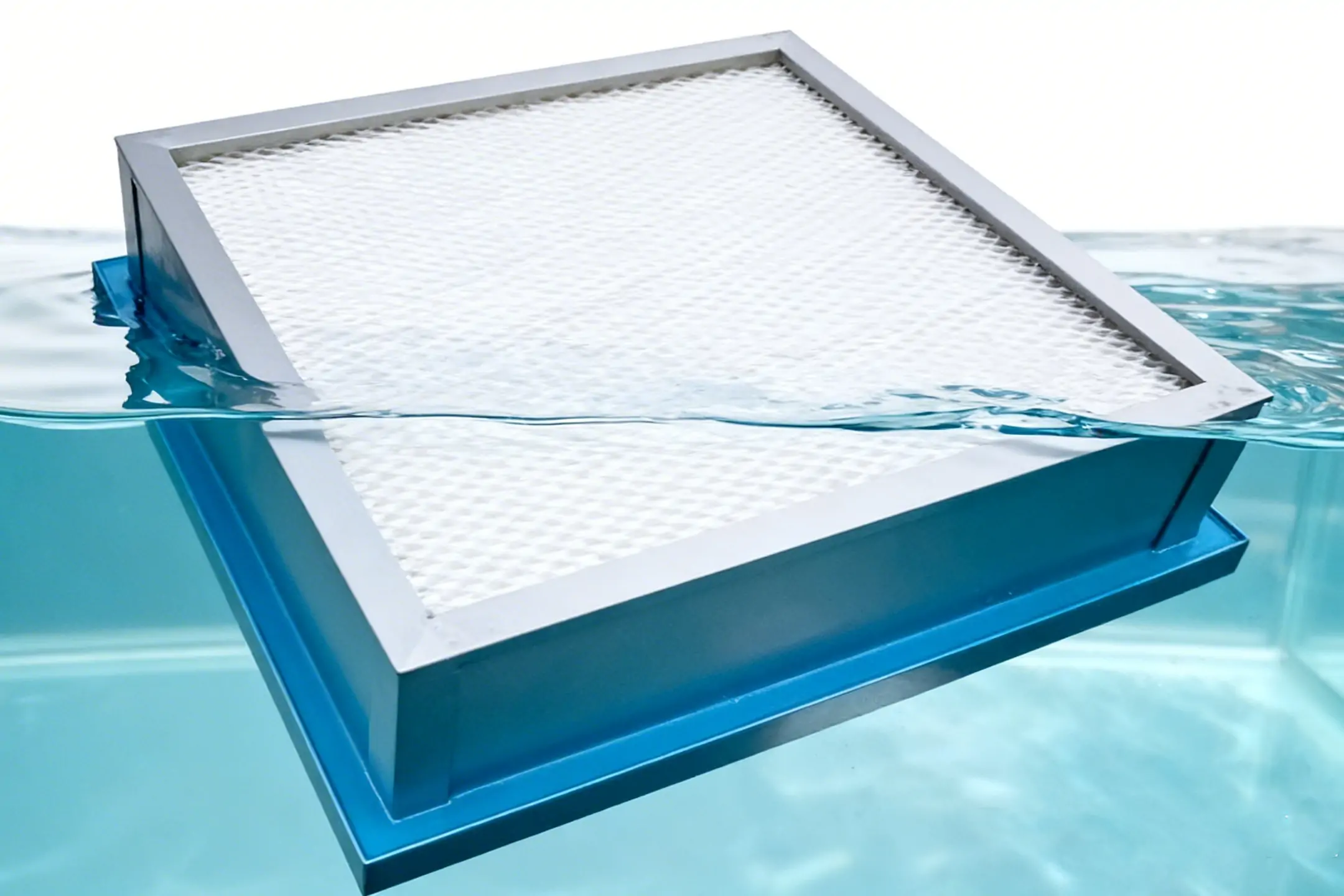
Both modes require HEPA filters; the only difference lies in their application and installation location.
Why Full Laminar Rooms Have Fallen Out of Favor
Operating an entire production room under laminar flow conditions may require air change rates exceeding 300–500 ACH. This means virtually the entire ceiling becomes a filter surface, fans run more intensely, and the air handling system must continuously process massive volumes of air.
Energy costs are only part of the equation. We also frequently see higher filter replacement costs, increased structural loads on the building, and greater complexity in return air pathways. Even small disturbances, such as large equipment, personnel moving through the space, or poor velocity uniformity, can generate eddy currents that disrupt the piston flow effect.
In practice, most modern pharmaceutical facilities no longer apply full-room laminar flow to Grade B areas. When viewed from an entire room perspective, the cost-effectiveness of this approach has become difficult to justify.

Comparison: Full Laminar vs. B+A Approach
| Parameter | Full-Room Laminar Flow | Turbulent / B+A Approach |
|---|---|---|
| Air Velocity | 0.36–0.54 m/s (High) | Lower (Mixed via diffusers) |
| Air Changes (ACH) | 300–500+ (Extreme) | Moderate (Grade B) |
| Energy Consumption | Very High | Significantly Reduced (25–40%) |
| Maintenance | High Complexity & Cost | Easier (Localized FFUs) |
| Application Scope | Critical Sterile Processes (Rare) | Grade B Background + Grade A Zones (Standard) |
The Practical B+A Solution
The standard practice in today's pharmaceutical cleanrooms follows what many engineers simply call the “B+A” model:
- Grade B background areas operate with turbulent airflow at moderate air change rates. This keeps the room clean enough for closed processes and general movement.
- Grade A areas, where the product is exposed, are protected by localized unidirectional airflow delivered through directional FFU systems, laminar flow hoods, or integrated RABS.
This is not a compromise, but a smarter use of resources. Critical protection is precisely deployed where it is actually needed, while the rest of the room operates at a reasonable energy consumption level.
We have assisted several retrofit projects where facilities transitioned from a full-laminar layout to a properly designed B+A layout. The result was a 25% to 40% reduction in overall energy consumption, with no impact on environmental monitoring results.
Airflow Organization Matters More Than Volume
Many project teams still believe the answer to contamination risk is simply more air. But experience tells a different story.
What really makes the difference is how that air is organized. The placement of returns, velocity matching at zone boundaries, where equipment sits, and how supply air patterns are managed—these details often matter far more than total airflow. In fact, poor organization can turn higher air volumes against you, creating turbulence exactly where you least want it.
This is where FFU systems excel. Modern units enable precise positioning and make face velocity easier to adjust. The result is localized unidirectional zones that are both highly effective and flexible. Paired with high-quality HEPA filters, they allow engineers to place clean air exactly where the process demands it.
Filter Performance in Real Systems
A HEPA filter's performance in the lab is one thing. Its performance inside an actual cleanroom is another.
Pressure drop, face velocity uniformity, and how air approaches the filter all affect long-term efficiency and energy use. Filters installed in well-organized airflow systems typically show slower pressure rise and more stable performance over time.
This is why we put significant resources into understanding complete system behavior, not just filter media. Wind tunnel testing, MPPS efficiency curves, and rigorous PAO leak testing after installation remain essential. These are not marketing checkboxes. They are practical tools that help ensure the system will behave as designed once the room is running with people, equipment, and processes inside.
Making Better Decisions Early
The best airflow designs we see come from early collaboration between process engineers, HVAC designers, and filtration specialists. CFD modeling and smoke visualization studies, when used properly, can reveal problems long before construction begins.
Facilities that invest time in optimizing airflow organization during the design phase consistently achieve better contamination control, lower operating costs, and smoother qualification.
Full-room laminar airflow still has its place; certain high-risk sterile processes genuinely need it. But for the majority of pharmaceutical cleanrooms, the combined approach has become the more rational choice.
At RT Air Filtech, we design and manufacture HEPA filtration products with these real-world conditions in mind. Because clean air is not just about filter efficiency on paper. It is about how the entire system performs on site, year after year.
RT Air Filtech — The Defender of Clean Air.