Why Glass Microfiber Is Used in H14 HEPA Filters
Why Glass Microfiber Is Used in H14 HEPA Filters?
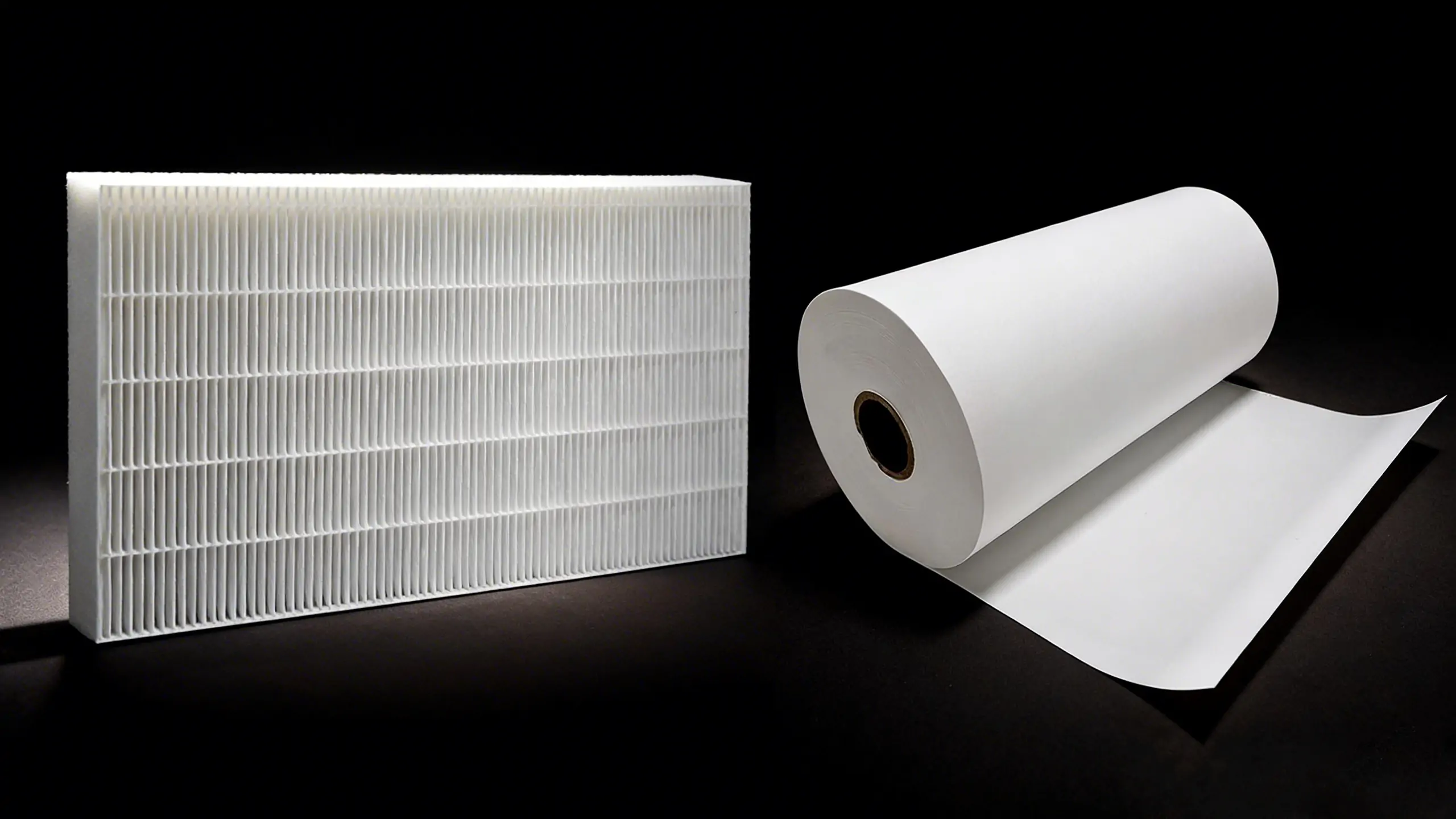
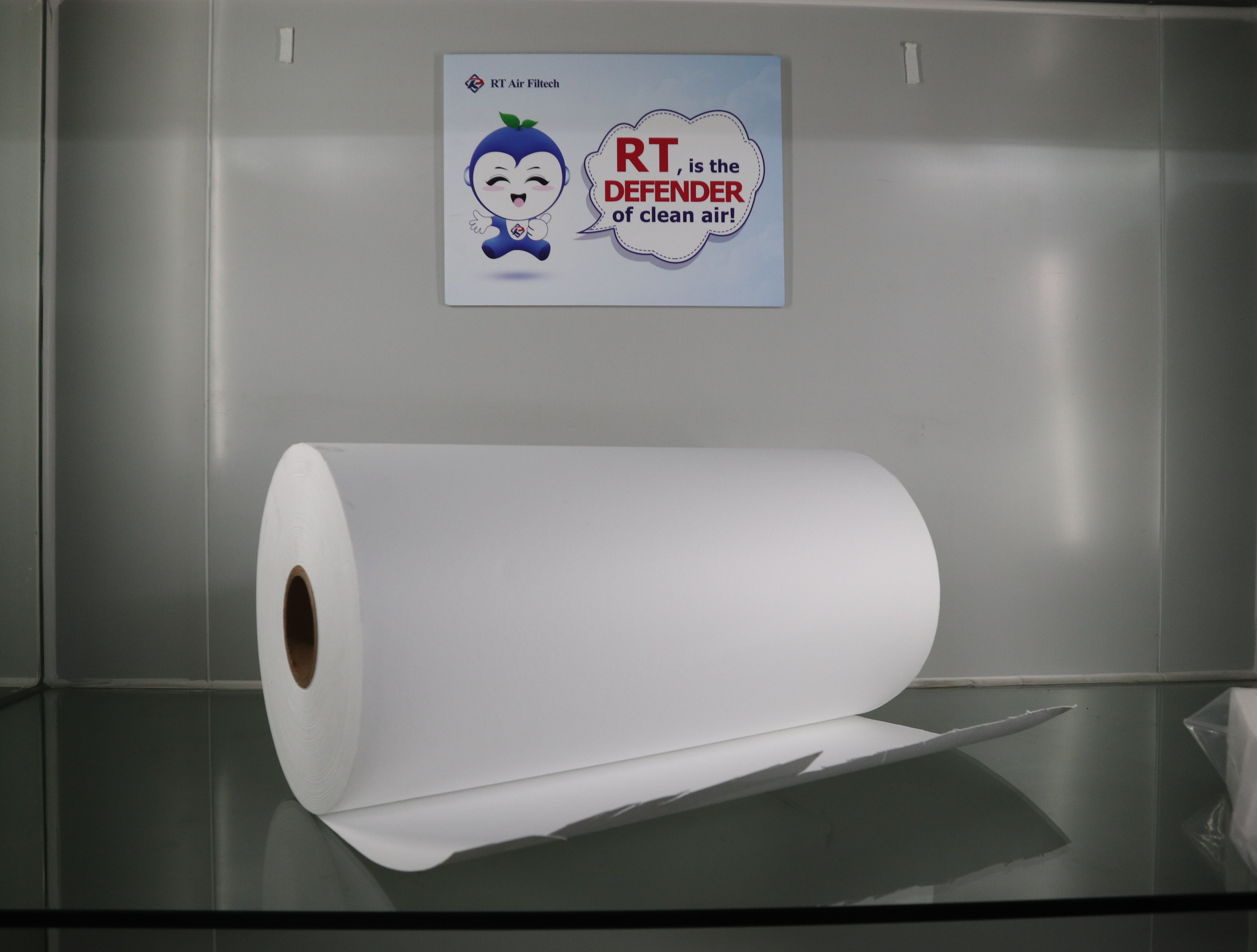
When discussing H14 HEPA filters, one material is almost always mentioned: glass microfiber. Many buyers ask why manufacturers do not simply use synthetic fibers or washable materials. Others assume that the frame or structure determines efficiency. In reality, the core performance of an H14 HEPA filter is defined by its filtration media, and glass microfiber remains the most reliable solution for achieving true high-efficiency classification.
To understand why, we must look at how H14 filtration works at the microscopic level.
H14 Efficiency Is Defined at MPPS
According to EN 1822, an H14 HEPA filter must achieve at least 99.995% efficiency at the Most Penetrating Particle Size (MPPS). MPPS typically falls within the submicron range, where particles are most difficult to capture. This is the critical test point that determines classification. Capturing particles at MPPS requires extremely fine fiber structure and stable mechanical filtration mechanisms. The media must create a dense, uniform fiber network capable of intercepting and diffusing microscopic particles without relying solely on electrostatic charge.
Glass microfiber provides exactly this capability.
Ultra-Fine Fiber Diameter Enables High Efficiency
The key advantage of glass microfiber lies in its extremely small fiber diameter. Compared to most synthetic fibers, glass microfibers can be manufactured with much finer and more consistent thickness. This creates:
- Higher fiber density
- Smaller pore size distribution
- Increased probability of particle interception
- Stable diffusion capture at low air velocity
The smaller and more uniform the fiber structure, the more effectively the filter captures MPPS-level particles. This is essential for achieving H14 performance.
Stable Mechanical Filtration Without Charge Dependence
Some synthetic filter media rely partially on electrostatic attraction to improve efficiency. While this can enhance initial performance, electrostatic effects may weaken over time due to humidity, temperature variation, or particle loading.
Glass microfiber, however, primarily relies on mechanical filtration mechanisms:
- Interception
- Inertial impaction
- Diffusion
Because efficiency does not depend on electrostatic charge, performance remains stable throughout the filter's service life. For critical environments such as pharmaceutical cleanrooms and hospitals, this stability is essential.
Structural Compatibility With Mini Pleated Design
Modern H14 HEPA filters often use mini pleated construction to increase effective filtration area. Glass microfiber media is well suited for pleating because:
- It maintains structural integrity when folded
- It distributes airflow evenly
- It performs consistently under controlled pressure drop
When properly bonded with hot-melt separators, the combination allows high airflow capacity while maintaining low resistance relative to efficiency level. Material choice directly influences airflow design capability.
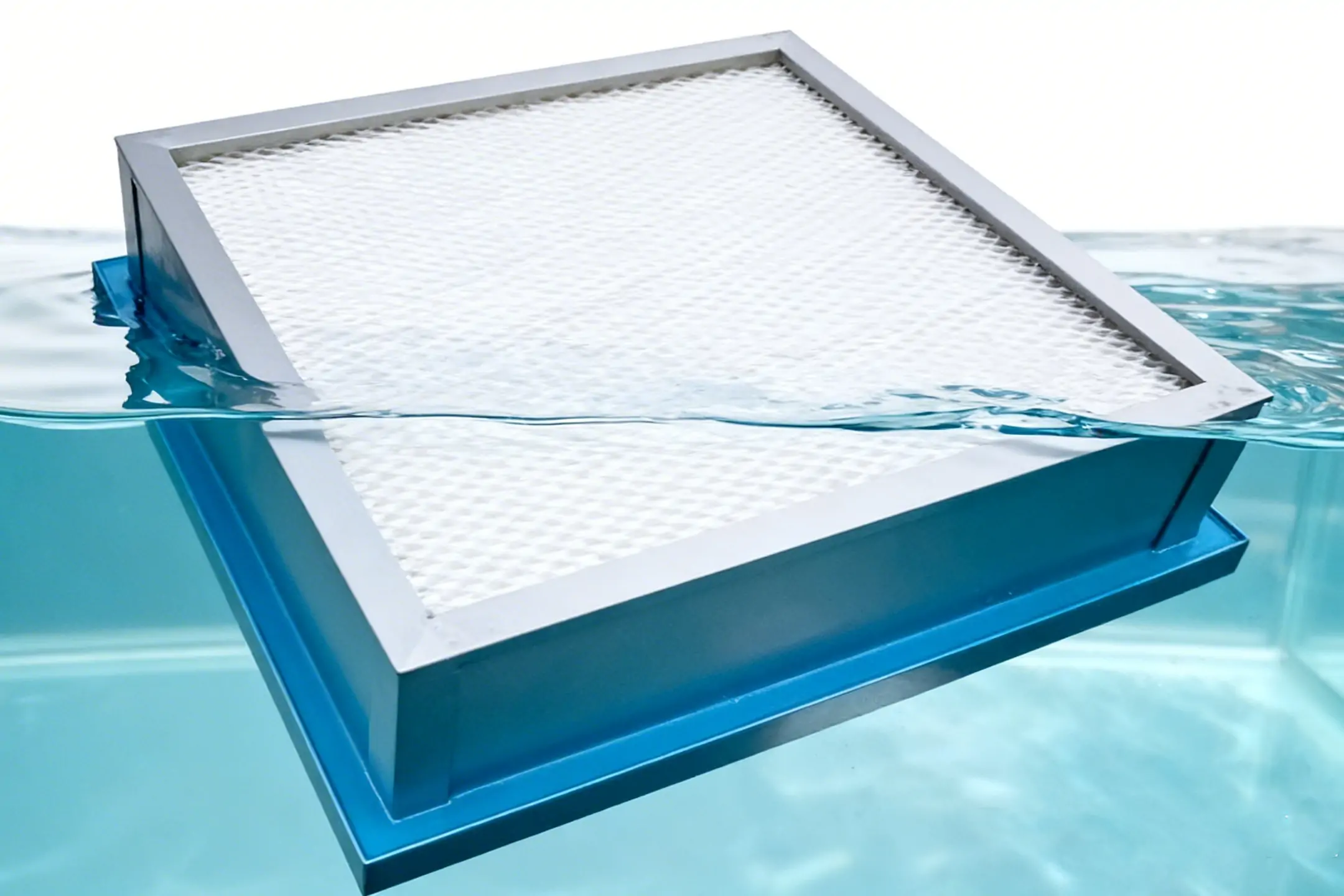
Why H14 Glass Microfiber Filters Are Not Washable
The same ultra-fine structure that enables high efficiency also makes glass microfiber delicate. Water pressure or mechanical cleaning can damage the microstructure, permanently reducing filtration performance. Once the fiber network is disrupted, the filter can no longer meet H14 classification under EN1822 testing.
For this reason, true H14 HEPA filters are designed as disposable products rather than washable media. Efficiency at MPPS requires structural precision, and that precision cannot be restored after washing.

Verification Through MPPS Testing
Material quality alone does not guarantee H14 performance. Final classification depends on MPPS efficiency testing and leak scanning in accordance with EN1822 requirements.
At our facility, H14 HEPA filters using glass microfiber media are tested with MPPS-based equipment to verify:
- Filtration efficiency
- Pressure drop
- Seal integrity
This ensures that airflow and efficiency specifications match real performance rather than theoretical assumptions. Without proper MPPS verification, media claims alone are insufficient. For applications requiring true H14 performance, material selection is the foundation of filtration reliability.