Why Paint Mist Lingers in Spray Booths
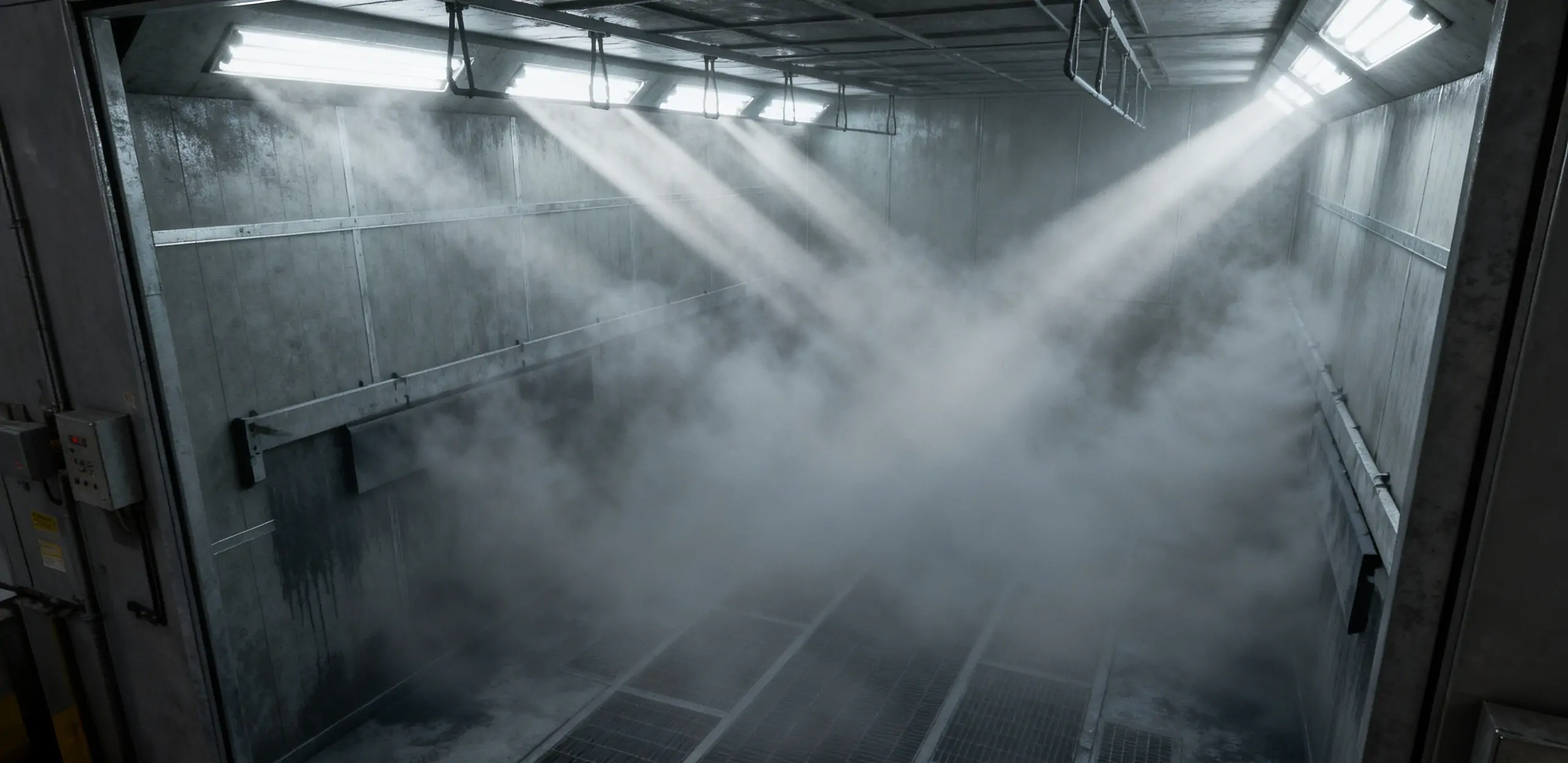
In paint spray booths, maintaining clear visibility and proper airflow is critical for finishing quality and worker safety. Yet many workshops frequently encounter a frustrating issue: after spraying, the booth remains hazy with paint mist suspended in the air for a long time, refusing to be exhausted efficiently.
This not only obstructs the next process but also allows high concentrations of paint particles and VOCs to accumulate, increasing the risk of quality defects and safety hazards. From the perspective of aerodynamics and filtration systems, this is typically a clear symptom of exhaust system blockage or disrupted airflow patterns.
This guide breaks down the four core technical reasons why paint mist refuses to leave and provides actionable troubleshooting steps.
1. Severe Filter Clogging
This is the most common cause of weak exhaust in spray booths. Whether dry or wet type, the exhaust fan’s ability to remove paint mist depends entirely on the negative pressure generated by the system.
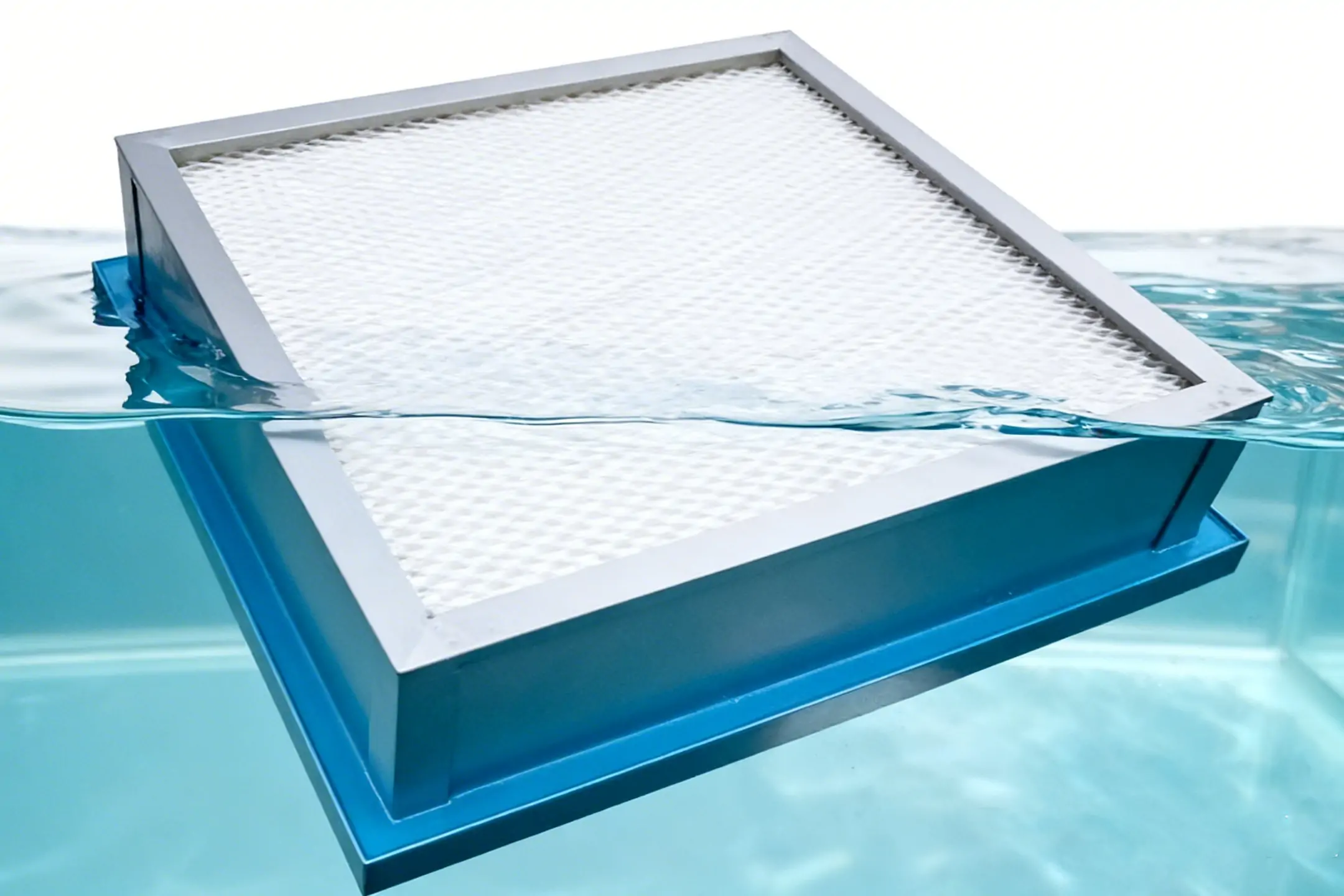
- Dry Spray Booths: The primary V-type labyrinth filter paper or secondary fiberglass paint mist pads may have become fully saturated and crusted. Without regular differential pressure monitoring and timely replacement, paint residue completely seals the filter’s micro-pores. Even if the fan is running, it cannot generate sufficient airflow.
- Wet Spray Booths: The downstream baffle plates (mist eliminators) may not have been cleaned for a long time. When coated with sticky uncured paint residue, the effective cross-sectional area of the exhaust path shrinks dramatically, choking the entire system.
2. Destroyed Airflow Organization
High-quality spray booths rely on well-designed directional airflow (cross-flow or downdraft). For paint mist to be carried away effectively, supply and exhaust air must be properly balanced.
- Clogged Ceiling Intake Filters (Top Filters): Many workshops focus only on exhaust filters while neglecting the intake filters at the ceiling. When these become heavily loaded, fresh air cannot enter effectively. This creates a situation of high negative pressure with almost no actual airflow — paint mist simply swirls in place. How Does the Structure of the Paint Booth Ceiling Insulation Affect Air Resistance?
- Imbalanced Supply vs. Exhaust Volume: Over time, loose fan belts or paint buildup on fan blades reduce exhaust fan performance. When exhaust volume falls significantly below supply volume, directional airflow collapses and paint mist remains suspended chaotically.
3. Downstream Waste Gas Treatment Equipment Blocked
Sometimes the problem is not inside the booth but at the end of the exhaust system.
If upstream filters have insufficient efficiency, fine dry paint powder and mist escape into the downstream equipment. This quickly coats activated carbon beds, molecular sieve rotors, or RTO ceramic heat storage beds, causing a sharp rise in terminal resistance. Even at full fan speed, the suction fails to reach the working area of the spray booth.
4. Disrupted Chemical Balance in Wet Systems
In wet spray booths, insufficient water pump pressure or clogged nozzles create gaps in the water curtain. Uncaptured sticky paint mist then rushes into the exhaust ducts and fan. Once the internal surfaces of the ducts become coated with viscous residue, the entire ventilation system’s performance collapses rapidly.
Practical Troubleshooting and Maintenance Recommendations
To permanently solve persistent paint mist haze, technical and procurement teams should establish the following data-driven maintenance protocols:
1. Implement Differential Pressure Monitoring for Filter Replacement
Stop relying on guesswork or fixed time intervals. Install differential pressure gauges before and after each filtration stage (labyrinth filters, paint mist pads, medium-efficiency bag filters).
Replace filters immediately when the pressure differential reaches the manufacturer’s final resistance value (typically when initial resistance doubles, or exceeds 200–250 Pa). Timely replacement not only restores strong exhaust but also prevents excessive energy consumption from overloaded fans.
2. Regularly Measure Face Velocity at Workstations
Use a portable anemometer to check the air velocity near spraying stations. According to industrial coating standards, face velocity should normally be maintained between 0.3–0.5 m/s. If readings fall significantly below this range, the ventilation system is restricted or failing — shut down and inspect immediately.
3. Strengthen Upstream Filtration to Protect Downstream Equipment
If downstream activated carbon or RTO systems are frequently clogging, your current pre-filtration setup is inadequate. Consider a proper gradient filtration strategy:
Use high-dust-holding labyrinth filters and progressive-density fiberglass pads in the first two stages to capture over 95% of paint mist, followed by F7–F9 medium-efficiency bag filters as final protection. This effectively prevents fine particles from reaching and damaging expensive downstream abatement equipment.
Conclusion
Persistent paint mist suspension in a spray booth is the system’s way of signaling exhaust restriction. By installing differential pressure gauges, regularly cleaning fan blades, and choosing high-capacity, high-airflow premium filters, workshops can maintain strong directional airflow. This ensures flawless paint finishes every time while supporting a safer, greener, and more compliant operation.