Why Rated AirFlow Differs Across HEPA Filter Manufacturers
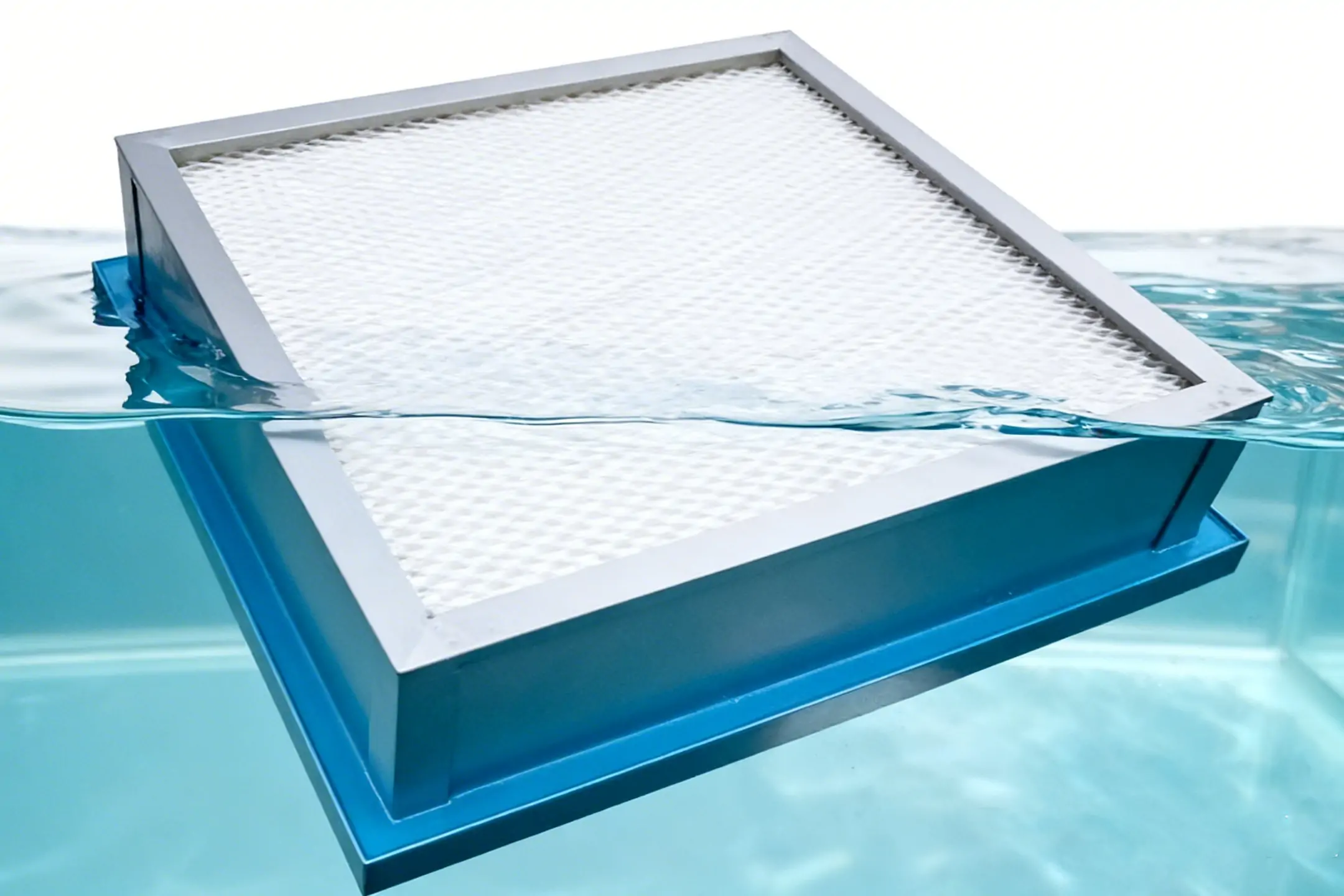
Rated AirFlow is a critical parameter in designing and selecting HEPA filters for industrial and commercial air handling systems. Engineers, procurement specialists, and system designers often notice that two HEPA filters of the same nominal size from different Air Filter Manufacturers can have very different rated AirFlow values.
These differences are not errors; they reflect variations in filter media, construction, pleat design, and testing protocols. Understanding the reasons behind these differences is essential to ensure proper system performance, energy efficiency, and filter longevity.
In this article, we explore the factors influencing rated AirFlow, outline common HEPA filter media and manufacturing methods, and provide guidance for industrial and export-oriented applications.
Understanding Rated AirFlow in HEPA Filters
Definition
Rated AirFlow is the maximum continuous airflow that a HEPA Filter can handle while maintaining acceptable pressure drop and filtration efficiency. It is typically expressed in:
- Cubic meters per hour (m³/h)
- Cubic feet per minute (CFM)
AirFlow ratings are usually determined under specific test conditions that include temperature, humidity, and initial pressure drop. Different Air Filter Manufacturers may adopt different conditions, which explains some variation in rated AirFlow.
Importance in System Design
- Ensures correct fan or blower sizing
- Controls pressure drop, which affects energy consumption
- Influences filter lifespan and maintenance intervals
- Misinterpreting rated AirFlow can lead to overstressed fans, reduced filtration efficiency, or premature filter failure
HEPA Filter Media Types
High-efficiency filters rely on specific media to achieve the desired filtration efficiency while maintaining manageable AirFlow. The most common types used by Air Filter Manufacturers include:
| Material | Description | Typical Applications | Remarks |
|---|---|---|---|
| Superfine Glass Fiber | Uniform fiber diameter, stable performance, moderate pressure drop | Industrial air handling, HVAC, cleanrooms | Suitable for F7–H14 efficiency |
| ePTFE Media | Uniform microporous structure, low pressure drop, chemically resistant | High-efficiency HEPA, industrial exhaust, cleanrooms | Typically used for H13–H14 filters |
| Composite PP Media | Lightweight, can be combined with other media to enhance performance | Medium to high-efficiency HEPA, industrial HVAC | Can improve moisture resistance and reduce pressure drop |
The choice of media directly affects AirFlow, pressure drop, and efficiency.
| Material | Model | Filtration Class | Eff. (0.3@5.3cm/s) | Ration (g/m²) | Thickness (mm) | I. N. P. (Pa) | Stiffness (mg) |
|---|---|---|---|---|---|---|---|
| Superfine Glass Fiber | RT-HGF13 | H13 | ≥99.97% | 75±5 | 0.39±0.04 | ≤255 | ≥1000 |
| ePTFE Composite Fiber | RT-FET13 | H13 | ≥99.95% | 80±10 | 0.4±0.1 | 95≤INP≤140 | - |
| Composite PP Fiber | RT-CPP13 | H13 | ≥99.95% | - | 0.75±0.05 | 38 | ≥400 |
HEPA Filter Manufacturing Methods
The construction method of a HEPA filter significantly affects its AirFlow performance. Common methods include:
| Manufacturing Method | Description | Typical Applications | Notes |
|---|---|---|---|
| Mini-Pleat (Small Pleats) | High pleat density, shallow depth | Small HVAC units, low airflow systems | Compact size but slightly higher unit-area resistance |
| Deep-Pleat | Deep pleats, larger effective surface area | Industrial exhaust, high-flow systems | Increases AirFlow, reduces pressure drop |
| Compact | Optimized pleat design and frame to reduce volume | Vehicles, confined spaces, specialized industrial equipment | Space-saving, may slightly increase pressure drop |
Different Air Filter Manufacturers may use slightly different pleat depths, spacing, or frame designs, which can lead to variation in rated AirFlow for nominally identical filter sizes.
| Process | Material | Model | Size (mm) | Rated AirFlow (m³/h) | I.N.P (pa) | F.N.P (pa) | Filter Area(m²) |
|---|---|---|---|---|---|---|---|
| Mini Pleated HEPA Filter | Superfine Glass Fiber | RT-MP8803-13 | 610*610*150 | 2000/4000 | <100/190 | <300/500 | 27.64 |
| Deep Pleated HEPA Filter | Superfine Glass Fiber | RT-DP8803-13 | 610*610*150 | 1000/1500 | <180/220 | <300/500 | 7.97 |
| V Bank HEPA Filter | Superfine Glass Fiber | RT-VB8805FM-13 | 610*610*292-5V | 1800/3600 | <180/280 | <450/500 | 19.06 |
Factors Causing AirFlow Differences Between Manufacturers
Even for filters with identical dimensions and efficiency ratings, AirFlow may differ due to several technical factors:
- Media Properties: Fiber diameter, density, and porosity affect air resistance. Even for the same nominal media type, manufacturer-specific production can result in different AirFlow performance.
- Pleat Geometry: Pleat depth, spacing, and count determine effective surface area. Greater surface area → higher AirFlow at the same pressure drop.
- Frame and Sealing: Frame rigidity and seal quality influence how air flows through the filter. Less rigid frames may deform under airflow, increasing resistance.
- Testing Protocols: ISO 16890, EN 1822, ASHRAE 52.2 define test procedures differently. Variations in pressure drop, temperature, and humidity during testing affect rated AirFlow.
- Safety Margins and Manufacturing Tolerances: Manufacturers often provide conservative AirFlow ratings to ensure reliability. Variations in pleat spacing, media thickness, or adhesive distribution can change actual AirFlow.
- Environmental and Application Considerations: Filters designed for high dust loading, high humidity, or export markets may have adjusted AirFlow ratings. Manufacturers may optimize for longer life or local standards, leading to differences.
Practical Implications for Buyers
When a Buyer Approaches a Supplier with a Target AirFlow
In real industrial and export-oriented projects, buyers often start with a clear requirement: a specific AirFlow, such as 2,000 m³/h, 3,400 m³/h, or 600 CFM.
However, AirFlow alone is not a complete specification. If the discussion stops at airflow, misunderstandings and mismatched products are very likely.
A professional Air Filter Manufacturer will never confirm a HEPA filter only based on airflow.
What a Buyer Should Provide to the Supplier
To avoid confusion and rework, buyers should ideally provide:
- Target AirFlow
- Maximum allowable pressure drop
- Required efficiency class
- Applicable test standard
- Installation constraints (size, frame type, sealing method)
- Operating environment (dust load, humidity, duty cycle)
With this information, a competent HEPA Filter manufacturer can design a filter that meets both AirFlow and system reliability requirements.
Why the Same AirFlow Can Lead to Different Quotations
Even with identical requirements, quotations may differ because of:
- Different media sources
- Different pleat and frame designs
- Different safety margins
- Different assumptions about service life
This does not mean one supplier is wrong. It reflects engineering trade-offs, not marketing differences.
Q&A – AirFlow in HEPA Filters
Q1: Why do two HEPA filters of the same size have different rated AirFlow?
A: Differences arise from media type, pleat geometry, frame design, and test conditions.
Q2: Should I always choose the filter with the highest AirFlow?
A: Not necessarily. Higher AirFlow may compromise efficiency or filter life if system pressure drop is ignored.
Q3: How do pressure drop and airflow interact?
A: Higher airflow increases pressure drop; filters must be operated within rated AirFlow to maintain efficiency and durability.
Q4: Are AirFlow ratings comparable across international Air Filter Manufacturers?
A: Only if test conditions and standards are consistent (ISO, EN, ASHRAE). Always verify datasheets.
Q5: How can I verify a HEPA filter’s real AirFlow performance?
A: Request independent test reports, or measure airflow in-situ at operating pressure drop.
Closing Note on Custom AirFlow Solutions
In many industrial and export-oriented projects, standard HEPA filters do not always match real system requirements. Differences in AirFlow, pressure drop, efficiency class, and installation constraints often require a customized approach rather than an off-the-shelf product.
Manufacturers such as Guangzhou RT Air Filtech Co., Ltd typically work from the required AirFlow and system conditions, then adjust filter media selection, pleat design, and construction method to achieve a balanced solution. This approach helps ensure that the specified AirFlow is achieved under defined pressure drop and efficiency limits, rather than relying on nominal ratings alone.
For buyers and system designers, working with a manufacturer capable of AirFlow-based customization can reduce mismatches, improve system stability, and extend filter service life—especially in industrial and export applications where operating conditions vary significantly.