How Do EN 1822 and ISO 29463 Difference in HEPA Filter Testing
What are EN 1822 and ISO 29463?
EN 1822 and ISO 29463 are international standards that define the testing and classification of high-efficiency particulate air (HEPA) filters and ultra-low penetration air (ULPA) filters.
EN 1822 is a European standard that specifies the performance requirements for these filters, including their efficiency in capturing particles of various sizes. It categorizes filters into different classes based on their efficiency, with H13 and H14 being the most common HEPA classifications. The standard emphasizes the importance of using state-of-the-art particle counting methods to ensure accurate testing results.
ISO 29463 is an international standard that aligns closely with EN 1822 but is recognized globally. It provides guidelines for the testing and classification of air filters used in cleanrooms and controlled environments. ISO 29463 also includes additional requirements for filter integrity testing and the assessment of filter performance over time. Both standards are crucial for industries that require high levels of air cleanliness, such as pharmaceuticals, biotechnology, and semiconductor manufacturing. They ensure that the filters used in these environments meet stringent performance criteria, thereby safeguarding product quality and compliance with health regulations.

How do the two standards differ in testing methodology?
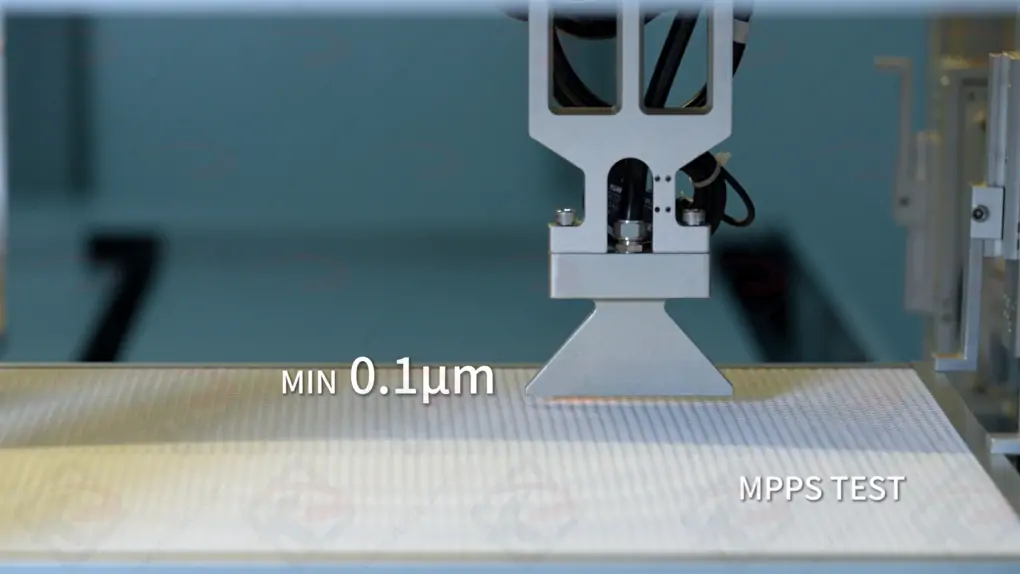
Both EN 1822 and ISO 29463 are based on the principle of testing filter performance at the Most Penetrating Particle Size (MPPS)—the particle size at which the filter is least efficient. However, their methodologies differ in structure, consistency, and global applicability.
EN 1822 focuses on a well-defined MPPS testing process, Learn about MPPS testing, where filters are evaluated using specific aerosol generation and scanning techniques to determine both overall efficiency and local penetration. The standard places strong emphasis on identifying the weakest point of the filter through detailed leak scanning, ensuring that each unit meets strict European performance requirements.
ISO 29463 builds on this foundation but introduces a more harmonized and globally standardized approach. While it also uses MPPS as the core testing principle, it allows for broader alignment in test conditions, equipment calibration, and reporting methods across different regions. This makes results more comparable between international laboratories and manufacturers.
In terms of test procedures, EN 1822 is often considered more prescriptive in its step-by-step methodology, whereas ISO 29463 provides a framework that standardizes testing globally while allowing controlled flexibility in execution. As a result, ISO 29463 is better suited for cross-border projects where consistency between different testing facilities is critical.
Overall, both standards ensure high-efficiency performance verification, but ISO 29463 enhances global consistency and comparability, while EN 1822 remains a highly detailed and widely trusted benchmark, particularly in European markets.
What are the differences in classification systems?
The classification systems of EN 1822 and ISO 29463 are closely related but differ in naming conventions and global usability.
EN 1822 classifies filters into three main groups: EPA (E10–E12), HEPA (H13–H14), and ULPA (U15–U17), based on efficiency at MPPS. ISO 29463 adopts a similar efficiency basis but uses a more standardized international naming system (ISO classes), making it easier to compare products across different regions.
| Category | EN 1822 Classification | ISO 29463 Classification | Typical Efficiency Range |
|---|---|---|---|
| EPA | E10 – E12 | ISO 15E – ISO 30E | ≥ 85% – 99.5% |
| HEPA | H13 – H14 | ISO 35H – ISO 45H | ≥ 99.95% – 99.995% |
| ULPA | U15 – U17 | ISO 50U – ISO 75U | ≥ 99.9995% and above |
How is leak testing handled differently in each standard?
Leak testing is a critical part of HEPA filter validation in both standards.
EN 1822 requires a mandatory scan test for each filter, detecting local leaks across the entire filter surface using highly sensitive aerosol measurement. This ensures that even minor defects are identified and classified.
ISO 29463 follows a similar scanning principle but introduces greater standardization in testing procedures across laboratories. It aligns testing methods internationally, ensuring consistent detection sensitivity regardless of where the test is performed.
The key difference lies in global consistency—ISO provides better harmonization, while EN remains highly detailed and prescriptive.
How do these differences impact real-world applications?
In real-world applications, both standards deliver reliable high-efficiency filtration, but their differences affect project execution and supplier selection.
EN 1822 is often specified in European projects and regulated industries such as pharmaceuticals and cleanrooms, where detailed testing procedures are required.
ISO 29463 is more suitable for international projects, where multiple suppliers and testing labs are involved. Its harmonized approach ensures consistency across regions, reducing confusion and simplifying procurement.
For industrial users, the choice often depends on project location, client requirements, and regulatory expectations.

Which standard should buyers and engineers prioritize?
There is no definitive answer, but a capable supplier can meet both criteria.
- Choose EN 1822 when working on Europe-focused projects or when it is explicitly required in specifications.
- Choose ISO 29463 for global projects where consistency across regions and suppliers is critical.
Suppliers typically continue to use the term EN 1822, but once more customers adopt ISO 29463 as the standard, they will likely change their terminology.
Contact us for detailed specifications and EN1822 / ISO 29463 testing documentation.