Industrial Activated Carbon Air Filters: How They Work & Benefits
Industrial activated carbon air filters are critical for factories, laboratories, and facilities that need to remove harmful gases, volatile organic compounds (VOCs), and persistent odors. Unlike mechanical filters (like HEPA), activated carbon uses adsorption—a chemical process that traps molecules on its porous surface—making it ideal for industries dealing with chemicals, paints, pharmaceuticals, and wastewater treatment.
At RT Air Filtech, we engineer high-efficiency activated carbon filters to meet stringent air quality standards. This guide explains how they work, their benefits, and how to choose the right system for your needs.
How Does an Industrial Activated Carbon Air Filter Work?
Activated carbon filters contain microscopic pores that attract and trap gas molecules through adsorption (not absorption). Here’s the science:
-
Polluted air passes through a bed of activated carbon granules or blocks.
-
VOCs, odors, and chemicals (like formaldehyde or benzene) stick to the carbon’s surface.
-
Clean air exits the system, while contaminants remain trapped.
Key Fact: 1 kg of high-quality activated carbon can adsorb up to 50% of its weight in pollutants.

Comparison:
| Filter Type | Targets | Best For |
|---|---|---|
| HEPA | Particles (dust, pollen) | Hospitals, cleanrooms |
| Activated Carbon | Gases, odors, VOCs | Chemical plants, labs |
Top 5 Benefits of Activated Carbon Filters
-
Removes Toxic Gases
-
Captures VOCs, formaldehyde, and industrial fumes (e.g., paint spray booths).
-
-
Eliminates Odors
-
Neutralizes stubborn smells in wastewater treatment or food processing.
-
-
Cost-Effective
-
Lower energy consumption vs. thermal oxidizers.
-
-
Regulatory Compliance
-
Meets EPA, OSHA, and EU air quality standards.
-
-
Customizable
-
Adjust carbon bed depth and pellet size for specific chemicals.
-
Industrial Applications
Activated carbon filters are used in:
-
Automotive: Paint shops (removes solvent vapors).
-
Pharmaceuticals: Controls chemical emissions in labs.
-
Wastewater Plants: Reduces hydrogen sulfide odors.
-
Food & Beverage: Purifies air in processing facilities.
Activated Carbon vs. HEPA Filters
| Feature | Activated Carbon | HEPA |
|---|---|---|
| Target | Gases, odors, VOCs | Particles (≥0.3µm) |
| Maintenance | Replace carbon annually | Replace filters every 6–12 months |
| Cost | $$ (higher upfront) | $ (lower upfront) |
Pro Tip: Combine both for complete air purification (e.g., hospitals use HEPA + carbon for particles AND odors).
Case 1: VOC Removal in a Chemical Plant
Problem: A Shanghai chemical plant had excessive toluene emissions (800 ppm).
Solution: RT Air Filtech installed a custom activated carbon system with:
-
12,000 kg carbon beds
-
95% toluene removal rate
Result: Complied with China’s GB 16297-1996 emission standards.
Case 2: VOC Removal in a Motorcycle Tire Plant
Solution: RT Air Filtech installed a custom activated carbon system with:
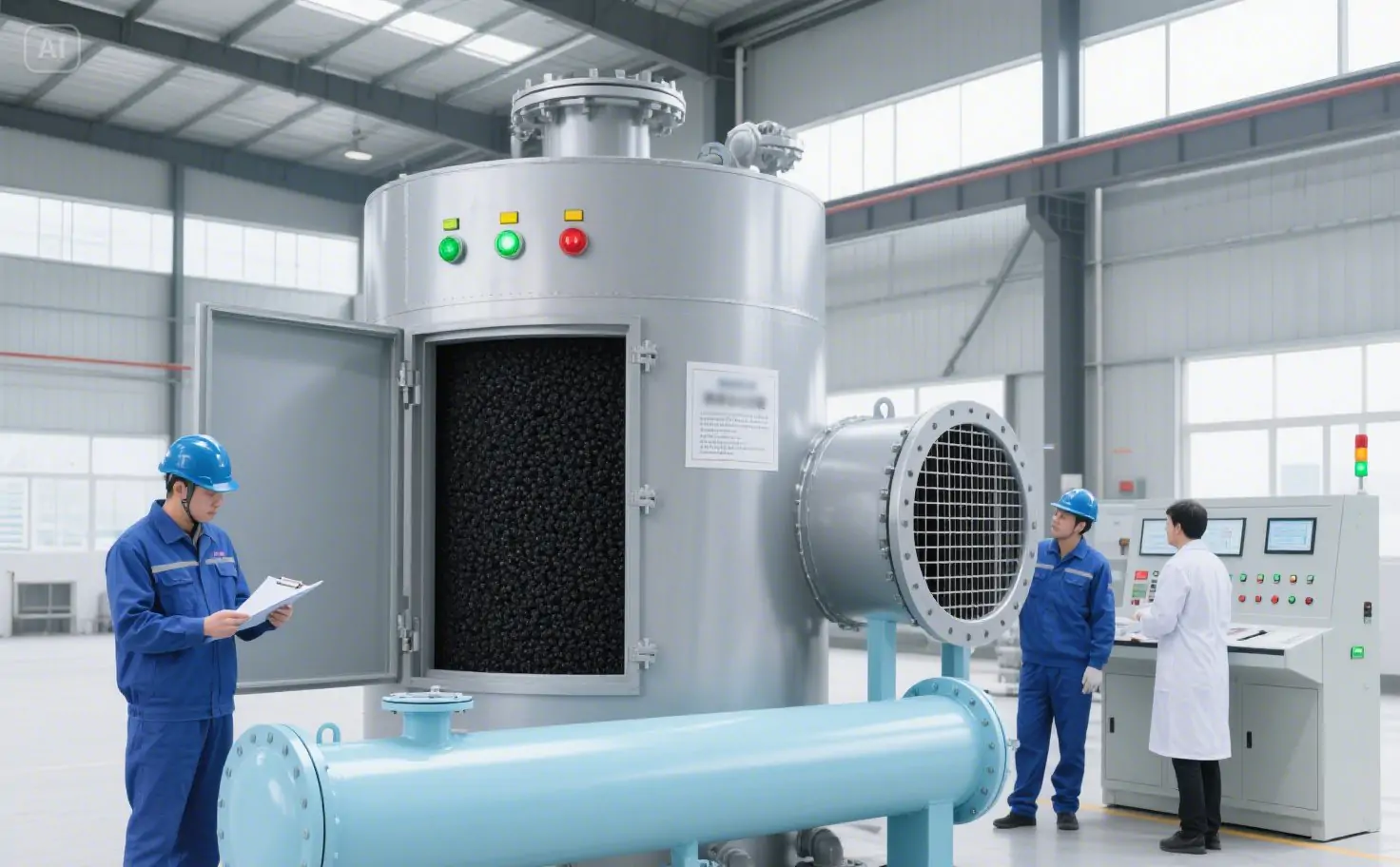
- The cellular activated carbon used in this project has a high removal rate due to its advantages of large surface area, developed micropores, wide pore size distribution, large adsorption capacity, fast speed, easy regeneration, and complete desorption.
- The activated carbon filter device is designed for double-layer filtration, and the organic waste gas rapid detector is installed in the middle to ensure its purification rate.
- The waste gas enters from the bottom of the device, passes through the lower carbon layer, and then filters through the upper carbon layer for double purification; When the rapid detector shows that the exhaust gas exceeds the standard, it means that the lower carbon layer has penetrated and the adsorption balance has been reached, the activated carbon in the lower carbon layer is discarded, the activated carbon in the upper carbon layer is replaced with a new activated carbon in the lower carbon layer.
- This can ensure that the carbon layer on the activated carbon filter device always maintains a high purification efficiency, and will not achieve adsorption balance at the same time, which and affect the purification effect.
| Design parameters of activated carbon adsorption device | ||||||
|---|---|---|---|---|---|---|
| Device | Process air volume | Size | Carbon bed length | Carbon content | Adsorption residence time | Replacement frequency |
| Activated carbon adsorption device |
57000m³/h
|
2.5m²×2.5m | 2.5m | 2.5t | 1s | Per year |
FAQ
Q: How often should I replace the carbon?
A: Every 6–18 months, depending on pollutant load.
Q: Can it remove COVID-19 viruses?
A: No—use HEPA for viruses. Carbon filters target gases, not pathogens.
Q: What’s the cost of an industrial system?
A: 5,000–5,000–50,000+, based on airflow (CFM) and chemical load.
Need a Custom Solution?
RT Air Filtech designs activated carbon filters for your industry’s unique needs.
✅ Free consultation
✅ ISO-certified manufacturing
✅ 3-year warranty
Contact us today: info@rtfiltech.com | www.rtfilters.com