What Is the Difference Between Regular and Waterproof Honeycomb Activated Carbon?
Below is a compilation of the most common industry questions regarding honeycomb activated carbon, waterproof honeycomb activated carbon, standard honeycomb activated carbon, VOC treatment, moisture environment adsorption, and price comparisons. This guide helps you quickly understand the differences between the two products and their respective application scenarios.
Q1: Why is honeycomb activated carbon categorized into standard and waterproof types?
A:Different operating conditions impose varying requirements on adsorbent materials.
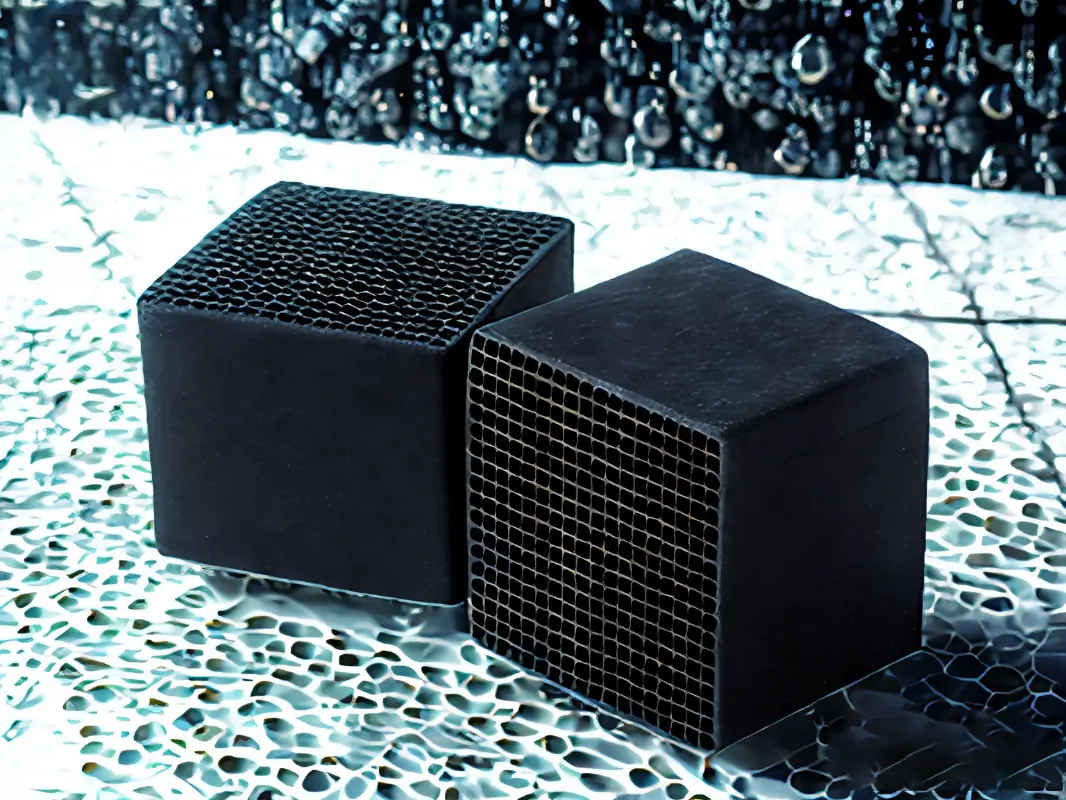
- Standard honeycomb activated carbon is suitable for dry gas environments, such as VOC exhaust gas treatment, air purification, and deodorization.
- Waterproof honeycomb activated carbon was developed to address the issues of cracking, pulverization, and failure that occur in standard carbon under high humidity or vapor conditions.
If exhaust gases frequently contain water mist, condensate, high humidity fluctuations, or residual water from spray towers, waterproof carbon must be used. Otherwise, standard carbon will experience significantly reduced service life.
Q2: What are the differences in the processing techniques for honeycomb activated carbon?
A: Waterproof honeycomb activated carbon incorporate an additional water-resistant treatment process specifically designed to enhance moisture resistance.
Standard Honeycomb Activated Carbon
A honeycomb-shaped activated carbon product formed by mixing activated carbon powder with a binder and water at a specific ratio, followed by kneading, molding, drying, and high-temperature sintering.
Waterproof Honeycomb Activated Carbon
Through high-temperature carbonization to form a robust skeleton, physical/chemical activation to construct a rich pore structure, followed by impregnation or spraying with waterproofing agents and secondary high-temperature sintering, the carbon body maintains structural integrity and uncompromised adsorption performance even in humid environments. This process ensures the high specific surface area of traditional honeycomb activated carbon while imparting outstanding waterproofing and acid/alkali resistance.

Q3: Why is waterproof honeycomb activated carbon superior in performance?
A: Waterproof honeycomb activated carbon outperforms conventional honeycomb activated carbon in terms of structure, physicochemical properties, and adaptability to operating environments, primarily manifested in the following aspects:
- Waterproof and Moisture-Resistant
Waterproof types maintain stable adsorption capacity in humid or water-containing environments without structural damage from moisture intrusion. Standard types exhibit significantly reduced adsorption performance under high humidity conditions and may even fracture and fail.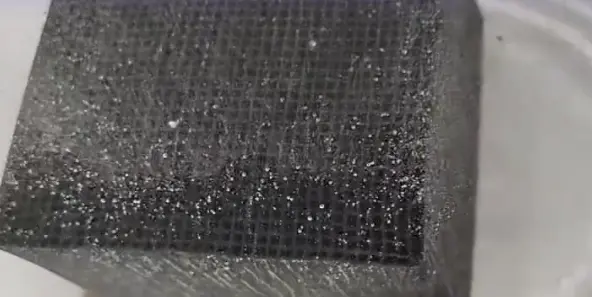
- Greater Specific Surface Area and Pore Structure
Waterproof activated carbon features a highly developed microporous/mesoporous structure with a specific surface area exceeding 800 m²/g, offering higher adsorption capacity than standard granular or fibrous activated carbon. This pore advantage enhances its capture efficiency for various gases (SO₂, NO₂, VOCs, etc.) and liquid-phase pollutants. - Low Resistance, Minimal Airflow Resistance
The honeycomb structure inherently provides unobstructed flow channels. Waterproof activated carbon further reduces through-hole resistance, resulting in lower pressure drop during gas passage and reduced energy consumption. This makes it suitable for continuous treatment of high-volume, low-concentration exhaust gases. - High mechanical strength and extended service life
The waterproof variant undergoes secondary high-temperature kiln calcination, achieving compressive strength exceeding 0.8 MPa. It exhibits excellent acid/alkali resistance and water resistance, with a service life of approximately 4 years—significantly outlasting standard types in humid environments. This directly reduces maintenance costs. - Combined Catalyst Support Advantages
The waterproof honeycomb activated carbon exhibits higher surface activity, serving as a catalyst support. It provides catalytic enhancement during processes like waste gas desulfurization and oxidation, further improving overall purification efficiency.
Q4: What is the market price for honeycomb activated carbon?
A: Waterproof honeycomb activated carbon typically costs more than standard types.
Standard honeycomb activated carbon is priced around ¥5,600. Based on market pricing data, the price difference between the two is approximately ¥2,000 per cubic meter.
Q5: What are the suitable applications for standard honeycomb activated carbon?
A: Standard honeycomb activated carbon is suitable for relatively dry exhaust gases and should not be used in excessively humid environments. Examples include:
- VOC treatment (benzene compounds, alcohols, esters, etc.)
- Formaldehyde, TVOC, and odor control
- Photocatalytic oxidation equipment
- Activated carbon adsorption units
- Indoor air purification
- Deodorization systems
Q6: When should waterproof honeycomb activated carbon be used?
A: If your exhaust gas is hot, humid, or contains water vapor, choosing waterproof types can significantly extend service life. Waterproof types are particularly suitable for the following conditions:
- High exhaust gas humidity (>70%)
- Pipelines prone to condensation
- High-humidity exhaust from spray scrubbers
- Gases containing volatile acids or alkalis
- Odor control at wastewater treatment plants
- Catalyst carriers and solvent recovery systems
- Workshop exhaust with significant temperature fluctuations and humidity variations
Q7: What happens to standard honeycomb activated carbon in humid environments?
A: If you notice these problems with your activated carbon, consider switching to waterproof honeycomb activated carbon.
- Cracking
- Powdering
- Significant decline in adsorption efficiency
- Complete block collapse
- Increased operational resistance
- Premature replacement, leading to higher costs