What is a Fan Filter Unit?
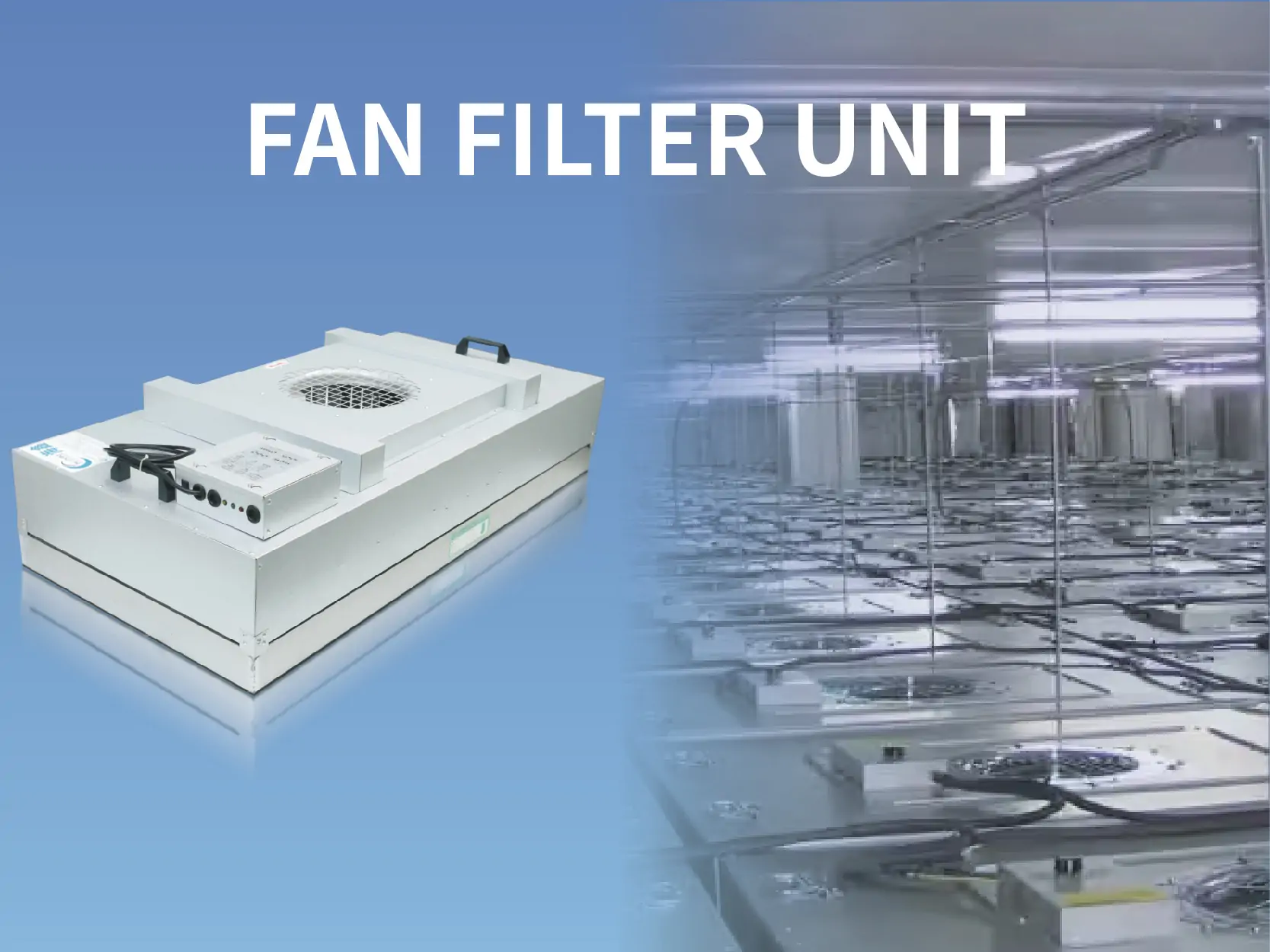
What is the Fan Filter Unit?
Motor and Fan/Blower:
1. The choice of AC fans
AC-FFU using manual speed controller control. It's a relatively small upfront investment, so commonly used in cleanrooms with fewer than 200 pieces of FFUs.
2. DC fan selection
EC-FFUs are ideal for large clean rooms, especially for scenarios where a large number of FFUs are required.
EC-FFU can realise intelligent monitoring and control of the operation status and faults of each unit through computer software, which greatly saves the maintenance cost.
Compared with the traditional AC-FFU, EC-FFU can save more than 30% energy. For a clean plant with a large FFU system, this means that it can save a considerable amount of energy expenditure every year.
EC-FFUs are also characterised by low noise levels.
Filters:
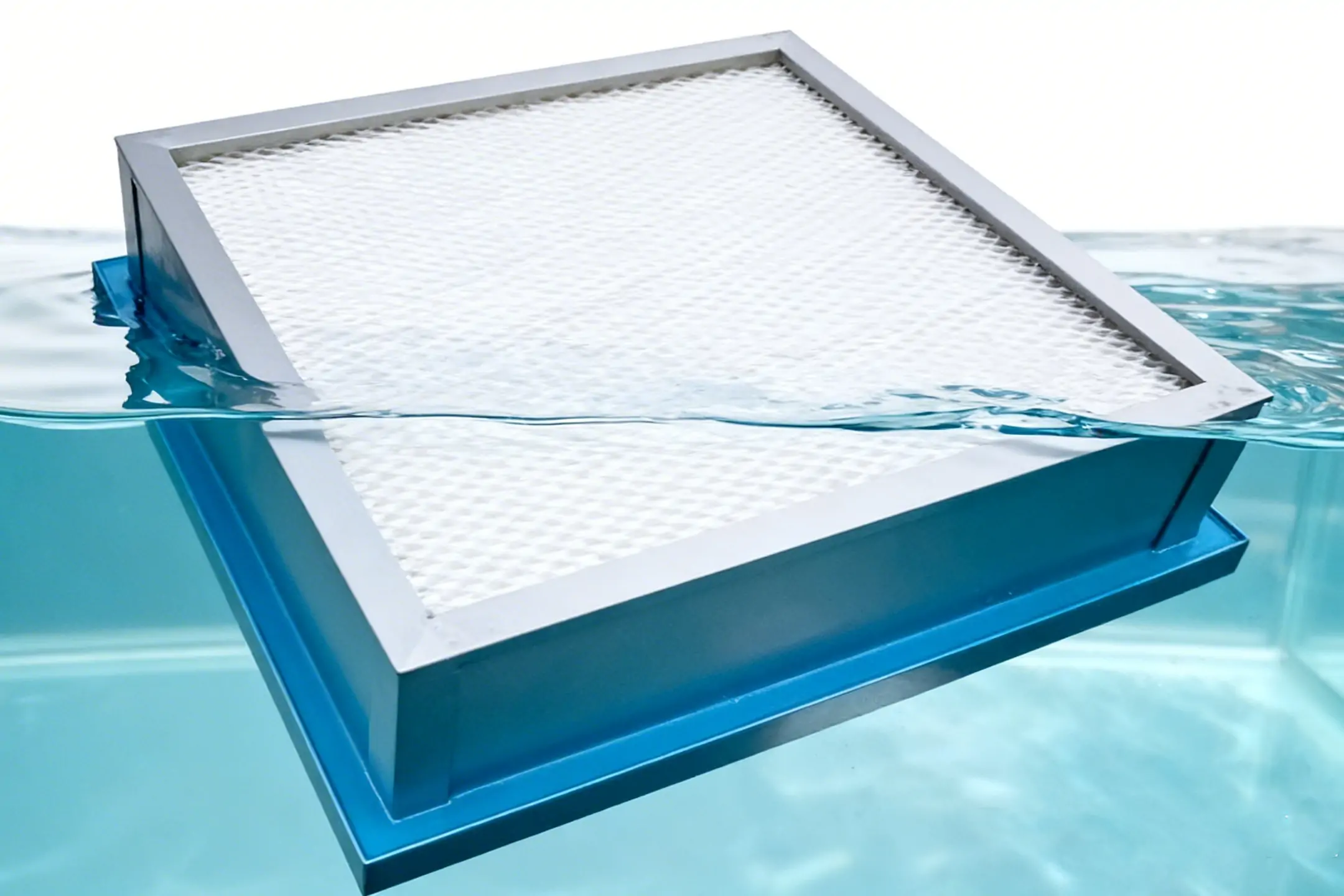
Pre-filter mainly captures larger dust particles in the air and is usually made of non-woven fabric and installed within the frame of the primary filter.
HEPA/ULPA Filter: high efficiency filter with a filtration efficiency of up to 99.999% @ 0.3 micron. ULPA filter with a filtration efficiency of up to 99.99995%@0.12 micron
Chemical Filter: Mainly used for adsorption and removal of harmful gaseous pollutants in the air, e.g., ammonia, boron, organic gases, etc., and is usually installed at the air intake position of the system
Housing:
Its material is commonly used galvanised aluminium alloy coated steel, aluminium alloy, stainless steel three. The role of one is to support the fan and wind guide ring, and the second is to support the deflector.
What does a fan filter unit do?
The Fan Filter Unit FFU mainly relies on fans and filters.
The working principle can be divided into three main steps: air intake, air filtration, and air discharge. Firstly, the built-in fan generates airflow and inhales indoor air through the air inlet; secondly, the air passes through the high-efficiency filter to filter out the dust, bacteria and other particles; lastly, the filtered clean air is sent out to the room at a uniform air speed of 0.45m/s±20% on the whole air outlet surface to complete the process of air purification. In this process, FFU purifies the indoor air through continuous operation, which provides high-quality clean air for clean rooms and microenvironments of different sizes and cleanliness levels.
Positive Pressure Ventilation of the Fan Filter Unit
FFU built-in fan generates static pressure, so that the pressure in the air supply static pressure box is lower than the internal pressure of the clean room, forming a ‘positive pressure difference’, so that unfiltered air from the outside world can not penetrate to ensure cleanliness. FFU static pressure needs to be linked with MAU (make-up air unit), DC (dry coil), and other systems to ensure synergistic control of temperature, humidity, and cleanliness.
Design Code for Clean Plants GB50073-2013 stipulates that the clean room (area) and the surrounding space must maintain a certain pressure difference, and should be maintained by the process requirements to maintain a positive pressure difference or negative pressure difference. The pressure difference between clean rooms of different grades should be at least 5 Pa. The pressure difference between the clean area and the non-clean area should be at least 5 Pa, and the pressure difference between the clean area and the outdoors should be at least 10 Pa.

What is the difference between a Fan Filter Unit FFU and a HEPA air supply?
Fan filter unit
Structural features: FFU is an independent air handling unit, usually composed of a filter, fan, housing, and other parts, which can be installed and replaced independently.
Working Principle: The fan inside the FFU sends the filtered air out evenly at a certain speed to form a stable, laminar airflow.
Advantages:
Flexible installation, easy to adjust, and replace.
Local control can be carried out according to the specific needs of the clean room.
Suitable for local purification of areas with high requirements.
Disadvantages:
Higher cost, especially in cleanrooms that require a large number of FFUs.
Large one-time investment.
High-efficiency air supply
Structural features: High-efficiency air supply outlet is an air supply device installed on the ceiling or wall of the clean room, usually connected with the fresh air system or circulating air system.
Working principle: High-efficiency air supply outlet will filter air sent out at a certain angle to form laminar flow or turbulence.
Advantages:
Relatively low cost, suitable for large area clean room.
Easy to maintain, easy to clean and replace filters.
Disadvantages:
Installation and adjustment flexibility is not as good as FFU.
Less effective in local area control.
How do MAU and FFU work together in an electronic clean room? How to calculate the ratio of airflow?
The principle of synergy between MAU and FFU
MAU (Make-up Air Unit) introduces outdoor fresh air, after primary, medium and high efficiency filtration, adjusts the temperature and humidity and sends it into the clean room. Static pressure box. At the same time, it is necessary to maintain a positive pressure environment of 10-15Pa, to ensure that the fresh air volume ≥ 30% of the total air volume, to prevent the penetration of external pollution.
FFU (Fan Filter Unit) receives clean air from MAU, and sends it into the clean room uniformly at 0.3-0m/s air speed through the ULPA filters, and then uniformly sends it into the clean room at a wind speed of 0.3-0.5m/s. The cleanliness of the room is maintained by the circulating air volume (ISO 5 requires ≥20 air changes/hour). At the same time, it maintains the cleanliness of the room by circulating the air volume and takes away the particles generated by the process.
To sum up, MAU provides ‘fresh air + positive pressure’, FFU realises ‘circulating filtration’, both of them work together to ensure cleanliness.
Calculation method of air volume ratio
Total air volume = Fresh air volume + Return air volume
Fresh air volume: provided by the MAU, which needs to satisfy the positive pressure demand and personnel respiratory demand ( ≥30m³/h/person).
Example: 100m2, 3m high clean room (ISO class 5), 20 persons:
Volume=100×3=300m³, air changes 20 times/h → Q total=300×20=6000m³/h.
Fresh air volume for persons=20×30=600m³/h, positive fresh air volume=300×10=3000m³/h → Q fresh air = 600 + 3000 = 3600m³/h.
Return air volume: filtered by FFU circulation, = Q total - Q fresh air
FFU airflow = Q total - Q fresh air = 6000-3600 = 2400m³/h.
If the airflow of a single FFU is 600m³/h, then 2400/600 = 4 units are needed, evenly arranged on the ceiling.